Research at universities is political, a fact made all the more evident during times of increasing social and political polarisation when politicians denounce universities as »enemies«. Such external attacks intersect with debates in academia itself, where research structures, purposes, and approaches are increasingly brought into question. The XV International Bauhaus Colloquium critically examines the politics that underlie, shape, or result from research. The interdisciplinary academic event provides a platform for exploring how research operates within and across infrastructures, epistemologies, power, and publics. Research politics manifest both in specific research projects and in the procedures and frameworks that define academic work as such. In addition to issues of access, representation, and ethics, the Colloquium addresses critical practices and highlights the ways in which research may both reinforce and challenge dominant hierarchies.
The fifteenth edition of the International Bauhaus Colloquium moves beyond its traditional focus on architectural theory and history to understand architecture as part of an extended field in which the arts, media, technologies, and society interact. The architectural perspective is integrated into contemporary questions of knowledge production, as well as the infrastructural and political conditions that shape it. As research is transforming rapidly through the effects of digital infrastructures and AI-trained knowledge production, the processes that are shifting its epistemological and institutional frameworks will be examined.
The Colloquium investigates research as a political practice operating in a contested field of historically specific forms of situatedness and shifting epistemologies, with specific attention paid to the role of architectural and artistic practices. In line with the Bauhaus tradition, it combines theoretical, aesthetic, and technical/empirical approaches to analyse and develop research politics in response to urgent questions within international discourse. Discussions are structured into four thematic tracks, each of which offers specific insights into the politics of research:
Track I: Practices examines current approaches to practice-based research, discussing their particularity, their transformative potential, and the capacity to renegotiate the relationship between researchers and society.
Track II: Institutions analyses political, economic, and spatial conditions of knowledge production. It brings together current propositions of institutional critique to examine the boundaries and infrastructures of the university as formations that must be both defended and transformed.
Track III: Ecologies recognises the role of localities and milieus, such as exposed geographies, Indigenous sites and communities, or marginalized cultural topics that become constitutive of research. It explores how proximity to local places and ecologies reshapes conventional research approaches and the ethical shifts they entail.
Track IV: Epistemologies addresses the need to critically engage with and unlearn dominant frameworks, often based on privileged Western paradigms, through decolonial, queer, and feminist practices. It examines how disciplinary traditions, established canons, and knowledge regimes, as well as barriers between theoretical and practical approaches, can be opened up to multiple perspectives.
Insights





Programme
Please note that the programme is subject to change and may be revised. Check the boxes to create your personal schedule.
►︎ Wednesday, 4 November 2026
Bnaya Halperin-Kaddari, Kerstin Ergenzinger, Julia Boike: Common Grounds / Participatory Performance
Milano, Italy
Bauhaus-Universität Weimar
Humboldt-Universität zu Berlin
‘Common Grounds’ explores strategies for per-sonifying environmental data and listening to the ecologies of our shared planet. Sustained by profound artistic-scientific exchange this multidisciplinary research asks how a long-term collaboration between climate science and sonic arts practices can be translated into public experiences that communicate and offer embodied, sensorial connections to the fragile complexity of planetary systems.
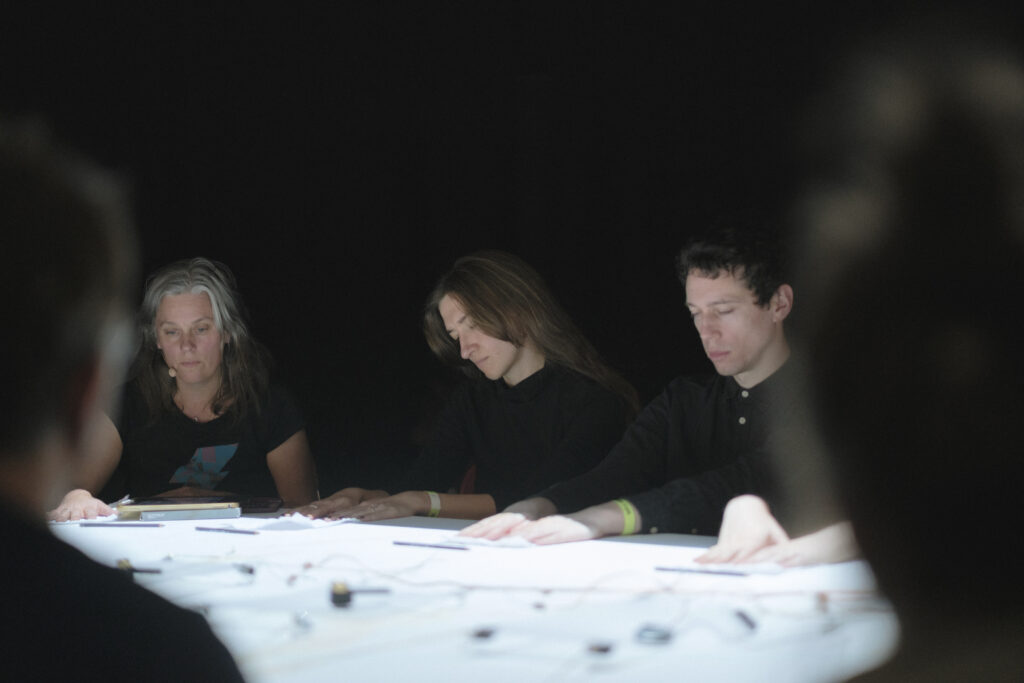
This participatory concert-lecture is a performative exploration of 25 years of hourly environmental data from a permafrost measurement station located in Ny Alesund Svalbard. The highly detailed data set is scaled into an hour, and translated into a participatory concert-lecture. It unpacks and tests some of the methods in development for listening, sensing, understanding and connecting to climate change from an embodied perspective. These include various sonic and somatic techniques that connect the planetary scale with individual and collective sensory scales of participants. The concert-lecture takes place around a table that is a hybrid surface for discourse, projection, policy, strategy, negotiation, communication and communion.
Bnaya Halperin-Kaddari, Kerstin Ergenzinger, Julia Boike, Marta Garcia Escobar, Ilse van Opzeeland, Pier Paul Overduin: Common Grounds / Panel Discussion
Milano, Italy
Bauhaus-Universität Weimar, Germany
Humboldt-Universität zu Berlin, Germany
University of Vienna, Austria
Helmholtz Institut für Funktionelle Marine Biodiversität, Germany
Alfred-Wegener-Institut Potsdam, Germany
The opening concert-lecture, like the project ‘Common Grounds’ as a whole, raise questions about epistemologies, ethics and politics. Building on this shared experience, we would like to propose an accompanying interdisciplinary panel to discuss artistic and hybrid approaches towards environmental literacy development, such as our sonic-somatic and listening-sensing methods. Key topics and questions may include amongst others: The potential of collective academic research across disciplines and paradigms for developing environmental literacy. Challenges of working long-term across art-science gaps: bridging differences in process, approach, evaluation and ethics. Etc.
►︎Panel Discussion: Building Knowledge: Design, Experiment, and Engage
Panel Discussion: Building Knowledge: Design, Experiment, and Engage
Building Knowledge: Design, Experiment, and Engage explores Real-Labs (real-world laboratories) as experimental environments where research, design, construction, and everyday use intersect. Organized by the Chair of Constructive Design and Experimentation at the Bauhaus-Universität Weimar, the panel brings together Sabine Hansmann, Tamotsu Ito, Chrissie Muhr, and João Quintela to discuss how living lab processes create architectural knowledge through experimentation, and learning from practice.
Focusing on adaptive reuse, collaborative construction, and working with existing structures, the conversation examines how these approaches are reshaping architectural education, professional roles, and public engagement. Drawing on projects such as Versuchsgut Dornburg, the panel reflects on both the opportunities and the limitations of Real-Labs, addressing questions of scalability, transferability, and their long-term value in differentsocial and spatial contexts.
►︎System Failure
Sophia Yadong Hao: Against a Tight Circle: Speaking in Favour of the Discursive and Digressive
Cooper Galery/University of Dundee, UK
“Against a Tight Circle” draws on five years of research and presentation of the contemporary art exhibition and event programme, The Ignorant Art School: Five Sit-ins towards Creative Emancipation (TIAS) to argue that alternative and radical creative pedagogies are inherently critical social practices grounded in collective, collaborative ethos.
The paper contends that the ‘system failure’ in academia is a result of neo-liberal capitalist antipathy for social formations that refute competitive individualism. Eschewing an art-historical analysis the approach will focus on the discursive and performative encounters that shaped TIAS’s deployment of subversive, revolutionary epistemologies that embody the complexity of anti-hegemonic, specifically decolonial, narratives.
As Audre Lorde stated, “Survival is not an academic skill. It is learning how to make common cause with those others identified as outside the structures in order to define a world in which we can all flourish.” This paper highlights the vital importance of such solidarity and collective resistance in reclaiming higher education as a site of radical transformation.
Leslie Foster: Black and Queer Otherwise Spaces: An Artistic Methodology for Creating Rival Geographies
California State University San Marcos, USA
“Black and Queer Otherwise Spaces: An Artistic Methodology for Creating Rival Geographies” examines my art practice, and its use of rival geographies, as a subversive methodology for art-making, and education within the neoliberal academy. Stephanie MH Camp defines rival geography as a mutable territory marked by the movement of bodies, objects, and information; a space of defiant joy in an antebellum geography of confinement. Fully legible only to certain groups of people, it serves as a temporal/spatial respite from plantation logics.
Ashon Crawley’ defines “otherwise spaces,” as worlds with the capacity to be multiple and a refusal to be stilled. My work embraces communal creativity, exploration, and process over a capital-friendly product. I will expand on the methodology of rival geographies, utilizing lessons gleaned from this collaborative, world-making practice to imagine what comes after: new worlds that defy and survive the ongoing collapse of the neoliberal institution.
Fidelia Lam: Let Them Eat Plastic: Power, Bioplastic, and Deviant Trajectories
OCAD University, Canada
This presentation considers the material, tactile, and socio-political structures and effects of university institution ecosystems as they process, filter, and transmute their inhabitants into idealized and idealizing subjects. Panel and audience cook and consume bioplastic together as an active process of making and eating bioplastic together, engaging in shared metabolic practices of smelling, listening, viewing, touching, eating, and digesting in an invitation to trace and queer digestive systems and contexts that “process” us. Building on Kyla Wazana Tompkins notion of “deviant matter” and Moten and Harney’s “undercommons”, these enactments query normative disciplinary categories and suggest deviant trajectories within university institutional contexts. Offering vegan bioplastic snacks to attendees, we activate bodily processes to consider how neoliberal systems are formed, felt, and metabolized by different bodies and subjects into emergent systems and modalities.
►︎Historical Bauhaus
Tom Steinert: Kandinsky. One Century of Ignorance
Berlin, Germany
Wassily Kandinsky (1866–1944) apparently counts among the well-researched Bauhäus¬lers. The 1923 questionnaire inquiring the mutual assignment of basic shapes and basic colours is his most famous contribution to the Bauhaus’s signature. This assignment is nowadays probably more effective than ever before. Regrettably, it was everything but a Bauhaus achievement, which seems to be widely unknown among Bauhaus scholars, due to reasons of language difficulties and accessibility, but also the traditions of Bauhaus historiography and institutional biases.
My contribution is an invitation to leave aside all limitations imposed by acquired ideologies and professional education, to surmount language difficulties and disciplinary boundaries in favour of a really interdisciplinary and unbiased research that is capable of doing justice to its subject. Such research will yield new and important insights into all those matters that before appeared to have been definitely investigated.
Anke Blümm: “Most Bauhäuslers are…completely intolerant of social injustice, political chicanery, and charlatanism” Reginald Isaacs and his research on the Bauhaus in the 1960s
University of Erfurt, Germany
If the Bauhaus legacy is to inspire transformative research, it is important to examine how scholarship itself contributed to the movement’s elevation. A key moment was the 1968 exhibition 50 Years of Bauhaus in Stuttgart, which presented the Bauhaus as a democratic symbol of the Federal Republic of Germany while largely overlooking its entanglement with the Nazi era.
The paper focuses on an essay by architect Reginald Isaacs, who was then researching a biography of Walter Gropius. Drawing on a survey of former Bauhaus members, Isaacs portrayed them as a morally and politically exemplary community, thereby idealising both the individuals and the institution. What objectives shaped his research? The contribution asks how such narratives can be critically reassessed while taking into account questions of gender, marginalisation, aesthetics, and political history.
Marija Dremaite: Bureaucratic Implementation of Modernism: Vladas Švipas and the Bauhaus as Administrative Capital
Vilnius University, Lithuania
Vladas Švipas (1900–1965), a Lithuanian architect trained at the Bauhaus (1924–1927), offers a case of architectural expertise within state bureaucracy in twentieth-century Europe. Rather than producing autonomous architectural objects, his career unfolded primarily within administrative institutions, where modernist principles were operationalized through planning, regulation, and standardization. Švipas entered state service and in 1929 joined the Chamber of Agriculture, responsible for rural modernization following land reform. Within this bureaucratic framework, he promoted rational planning, functional design, and standardized rural construction. His later career reflects the entanglement of architectural expertise with geopolitical rupture and migration. During the Second World War, he worked within occupation administrations, and after 1945 continued his professional activity in Displaced Persons camps in West Germany and later in the United States. This trajectory highlights the transnational mobility of technical knowledge and the adaptability of architectural-bureaucratic expertise across radically different political regimes.
►︎Disobedient Methods: Research Beyond Neutrality and Discipline
HE Shen 何珅: Piaopiao[飘飘] as Method: Dialect (as) Archive and Wandering through Teahouse
ETH Zurich, Switzerland
The Sichuanese dialect term piaopiao [飘飘] emerged in the 1990s as a vernacular expression for wandering lives. Derived from the verb piao (“to float”), it came to describe those living outside patriarchal, reproduction-oriented family structures and served as an alias through which homosexual men recognised one another in Sichuan’s teahouses. Embedded in spoken language rather than institutional archives, piaopiao condenses histories of sexual dissidence and spatial fugitivity into a single dialect term. This paper develops piaopiao as a research method for architectural history and theory. It argues that the Sichuanese teahouse is not merely a backdrop for piaopiao sociality but a porous care infrastructure organised through passage, co-presence, and hospitality. Reading the teahouse’s permeability through piaopiao thus repositions dialect as a living archive of spatial knowledge and offers a situated account of how architecture mediates gender and sexual dissidence.
Pawel Moscicki: Critical Theory (…) Conspiracy Theory
Institute of Literary Research, Poland
If contemporary humanities have a common denominator or center that organizes their various forms, it would be critical theory. What would be its general counterpart? What constitutes the “evil spirit of the humanities” that it must exorcise in order to constitute itself as a science and thus also prove its social value? In my opinion, this negative foundation today is “conspiracy theory”. Conspiracy theory embodies everything that critical thinking, and thus academic humanities, does not take seriously, considering it suspicious, absurd, crazy, and dangerous. And it is in this juxtaposition that it increasingly sets its boundaries. Critical theory ends where conspiracy theory begins, and vice versa. But are these two basic frameworks really completely separate? Are they divided by a difference in nature or only in degree? Is there an area where they overlap? Does this division ignore the important political (e.g., class) conditions for the legitimacy of research in the humanities?
Christos Constantine: Neutrality, Masking, and the Politics of Research: A Reflection on Disciplinary Pressure in Conceptual Work on Autism
Adelaide, Australia
This presentation asks how research identity becomes credible within contested fields. Beginning from autism discourse, where terms such as “autistic person,” “person with autism,” “neurodivergent,” and “profound autism” are politically charged, I examine masking as both a lived practice and an unstable research concept. I argue that research cultures also produce masks: forms of scholarly personhood through which researchers become legible as neutral, rigorous, accessible, activist, or professional. Drawing on conceptual engineering, epistemic injustice, and Bauhaus questions of form and function, the talk asks how scholarly forms regulate proximity and distance, visibility and access, and what they enable or exclude. Concepts do not only classify research objects; they also authorise speakers, positions, and distances. The politics of research therefore includes the conditions under which scholarly roles become available, credible, and liveable.
Seyyal Carnetto: For More Stupidity in Research: Dwelling in the Politics of Research Time
The European Graduate School, Division of Philosophy, Art & Critical Thought [PACT], Switzerland
Contemporary research is shaped by demands for measurable impact, acceleration, and constant performance. This paper treats research time itself as a political problem. Drawing on Jacques Rancière’s critique of the explicatory order and Giorgio Agamben’s notion of messianic time, I propose research-as-dwelling: a form of inquiry that suspends predefined ends and inhabits an unfinished present.
Following Tyson E. Lewis, I call the mode of this dwelling “stupidity.” Here, stupidity does not mean anti-intellectualism, but the capacity to stay with not-knowing, hesitation, and impotence without immediately converting them into output. Through a temporal reading of Hedwig Houben’s lecture performance Five Possible Lectures on Six Possibilities for a Sculpture, the paper argues for a politics of research centered on study, suspension, and unfinishedness.
Samia Henni: Psychological Warfare: Architecture for the Political
McGill University, Canada
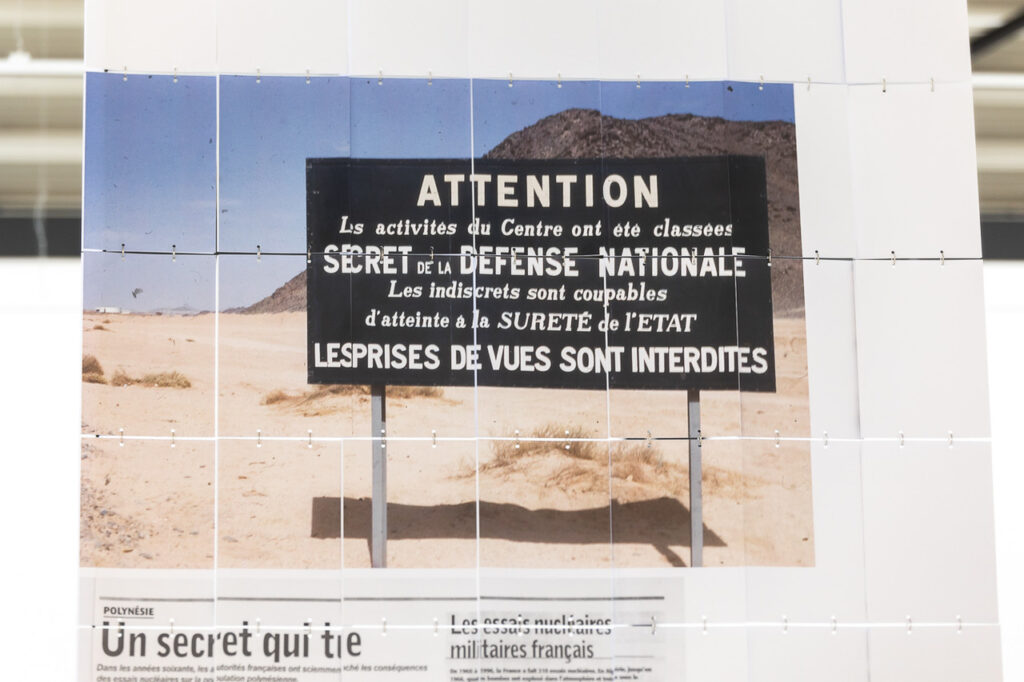
In the aftermath of the Second World War and over the course of the Independence Movements in Africa and Asia, psychological warfare was widely performed on civilian populations and military personnels. This lecture unpacks the roots and ramifications of this military measure and exposes the features of a possible “architecture for the political” within the context of academic research. Through two publications and two exhibitions, the lecture offers research tools and discusses public methods for forming, informing, and disseminating an “architecture for the political.” Whereas the first part of the lecture discusses how to oppose the politics and dynamics of psychological warfare through history writing, the second part explores how to use academic protocols to discharge imposed amnesia and institutional censorship through exhibition making. The lecture engages with the intersections of spatial, social, and environmental justice, as well as anticolonial practices. It addresses the roles that both scholars and institutions play in generating and supporting an “architecture for the political” in the current world dis-order.
20:30–22:30
Philipp Gerschlauer: Listening as Resistance. Acoustic Politics and Expanded Pitch Practices in Jazz Improvisation
Music and Arts University of theCity of Vienna, Austria
This lecture performance examines how jazz improvisation, understood as an intonationally flexible and historically situated practice, can expose and reconfigure listening frameworks embedded in institutional training. Equal temperament, reinforced through the central role of the keyboard in jazz pedagogy, often becomes the default reference for harmonic understanding and musical correctness. My artistic-scientific research investigates how this orientation shapes listening through pitch analysis of historical recordings, autoethnographic reflection, and interviews with students. Expanded pitch spaces can initially challenge established habits of hearing, fingering, and harmonic expectation. The lecture performance combines live alto saxophone improvisation, analytical excerpts, and practice-based reflection to explore how alternative listening practices can foster artistic agency and open new epistemic possibilities within jazz education.
20:30–22:30
Onkar Singh Kular: Housing Music Volume 2: A Mixtape Methodology
University of Gothenburg, Sweden
Through spoken word, moving collages and vinyl records this performance lecture will describe how Black and South Asian diasporas have made spaces, objects and broadcasting infrastructures within the sonic cultures of reggae, dub, bhangra, jungle and grime. In the UK and beyond, these sonic cultures have not only remapped geographies but have been inscribed into landscapes as a form of spatial, aural, material, and embodied evidence. As these inscriptions have been largely ignored by the field of design and architecture, to uncover this history requires alternative modes and cultures of researching, archiving and mediating.
Over the last years, I have been searching for these inscriptions by ‘digging in the crates’ of historical radio, TV, documentary interviews and vinyl records that sit outside of conventional design and architecture scholarship. Once inscriptions are edited, sampled and mixtaped, they begin to build a counter archive of design experience and knowledge for other voices and perspectives within the canon of design history.
Housing Music Volume 2 will focus on and depart from the home and house as a site of Black and South Asian creativity.
20:30–22:30
David Atencio, Mateus Fávero: Tercer Abstracto (Chile/Brazil): Rethinking Artistic Research from Latin America
Pontificia Universidad Católica de Chile; Universidade de São Paulo, Brasil & Pontificia Universidad Católica de Chile
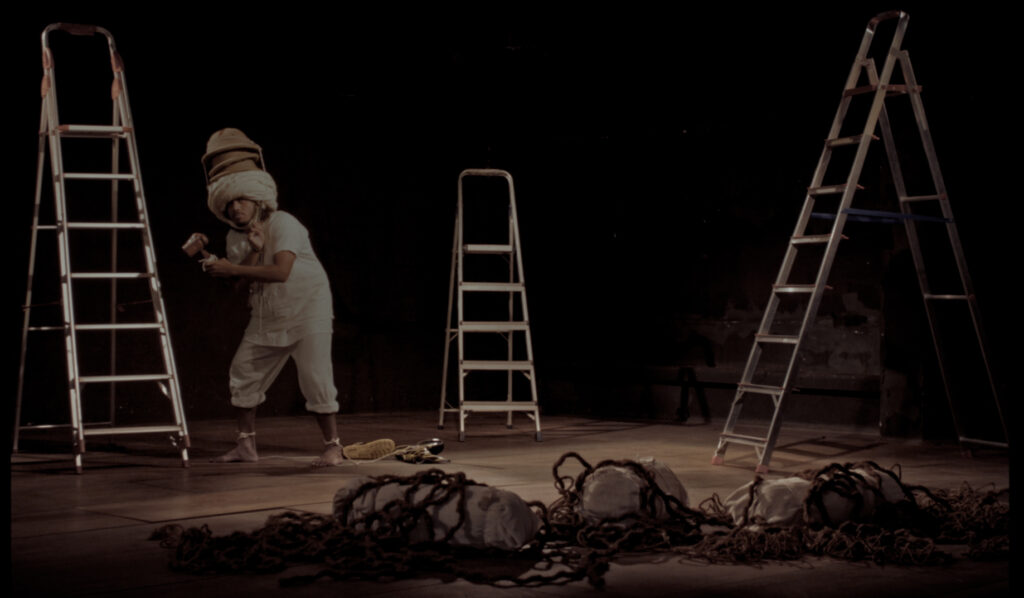
EN: This lecture-performance presents the perspective on artistic research developed by Tercer Abstracto, a binational research and creation program in theatre (Chile/Brazil), over fourteen years of research. The activity is conceived as a technical demonstration in which live scenic procedures seek to make visible a mode of research in which theatrical practice is explored as a form of knowledge production. Throughout its trajectory, the collective has developed projects that traverse different objects of inquiry, including works, artists, and manifestos associated with the Bauhaus tradition, among other fields of reference, thus constituting a distinct methodology from a situated Latin American perspective. Rather than retrospectively explaining this methodology, the proposal puts it into action as a way of exposing the research process, opening a reflection on how artistic research in theatre is produced between theory and practice.
PT: Tercer Abstracto (Chile/Brasil): Repensando a Pesquisa Artística a partir da América Latina
Esta palestra-performance apresenta a perspectiva sobre pesquisa artística desenvolvida por Tercer Abstracto, programa binacional de pesquisa e criação em teatro (Chile/Brasil), ao longo de quatorze anos de investigação. A atividade é concebida como uma demonstração técnica em que procedimentos cênicos ao vivo buscam tornar visível um modo de pesquisa em que a prática teatral é explorada como forma de produção de conhecimento. Ao longo de sua trajetória, o coletivo desenvolveu projetos que atravessam diferentes objetos de investigação, incluindo obras, artistas e manifestos associados à tradição da Bauhaus, entre outros campos de referência, constituindo uma metodologia própria a partir de uma perspectiva latino-americana situada. Em vez de explicar retrospectivamente essa metodologia, a proposta a coloca em ação como forma de exposição do processo de pesquisa, abrindo uma reflexão sobre como a pesquisa artística em teatro se produz entre teoria e prática.
ES: Tercer Abstracto (Chile/Brasil): Repensando la Investigación Artística desde América Latina
Esta perfo-conferencia presenta la perspectiva sobre investigación artística desarrollada por Tercer Abstracto, programa binacional de investigación y creación en teatro (Chile/Brasil), a lo largo de catorce años de investigación. La actividad se concibe como una demostración técnica en la que procedimientos escénicos en vivo buscan hacer visible un modo de investigación en el que la práctica teatral se explora como forma de producción de conocimiento. A lo largo de su trayectoria, el colectivo ha desarrollado proyectos que atraviesan diferentes objetos de investigación, incluyendo obras, artistas y manifiestos asociados a la tradición de la Bauhaus, entre otros campos de referencia, constituyendo una metodología propia desde una perspectiva latinoamericana situada. En lugar de explicar retrospectivamente dicha metodología, la propuesta la pone en acción como forma de exposición del proceso de investigación, abriendo una reflexión sobre cómo la investigación artística en teatro se produce entre teoría y práctica.
20:30–22:30
Esra Oskay: Anonymous Censorship Notes
Ankara, Turkey
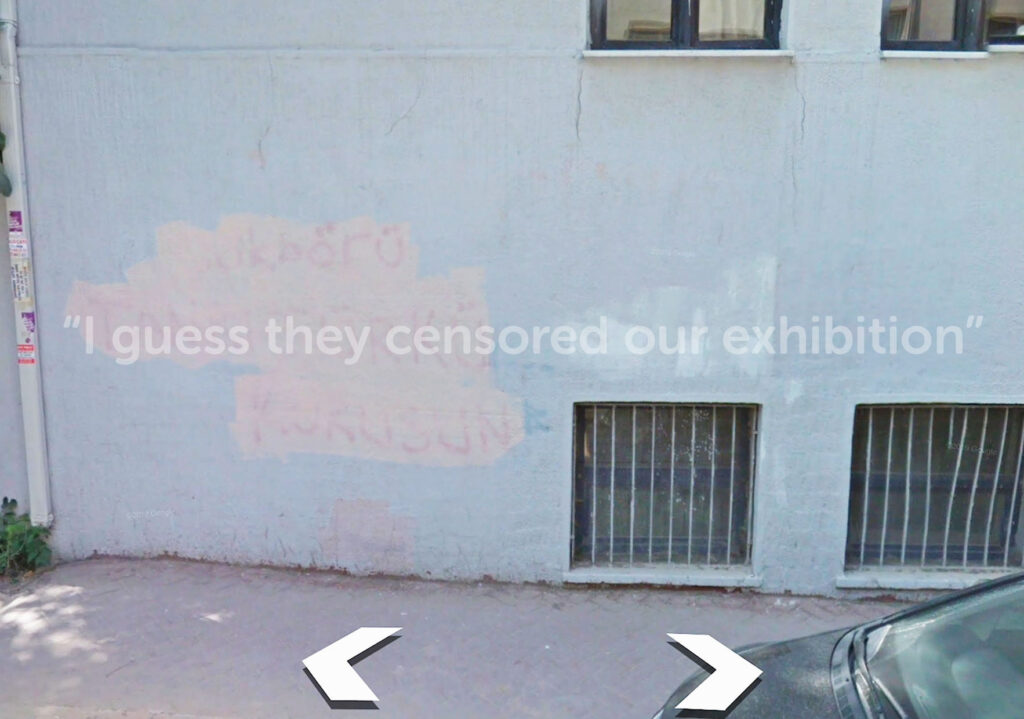
The act of speaking out and breaking silence is often regarded as an unequivocal form of resistance. Silence is considered the auditory form through which oppressive power paralyzes the voice of dissent. Yet what is considered as silence might be those acts of speech that operate beneath the threshold of official audibility, of what is sayable. “Anonymous Censorship Notes”, investigates how the politics of voice infiltrates into everyday self-censorship through a closer study of mundane conversations that goes under the radar. The video work is based on my fieldwork in which I listened to the stories of censorship that I have overheard and documented while listening to conversations among people. Although these informal conversations provide data through contested research methods within the formal research ethical protocols, these conversations are important means of expressing the unsayable, producing and disseminating sensitive knowledge and forming alliances, and hence understanding the affective world of censorship. In this framework, the work turns into sensitive documentation at the limits of the visible and sayable, and seeks for an alternative language of counter-visibility that does not resolve the asymmetry at the field but works within it.
20:30–22:30
Padraig Robinson: Masquerades of Research: Part I & II
Berlin, Germany
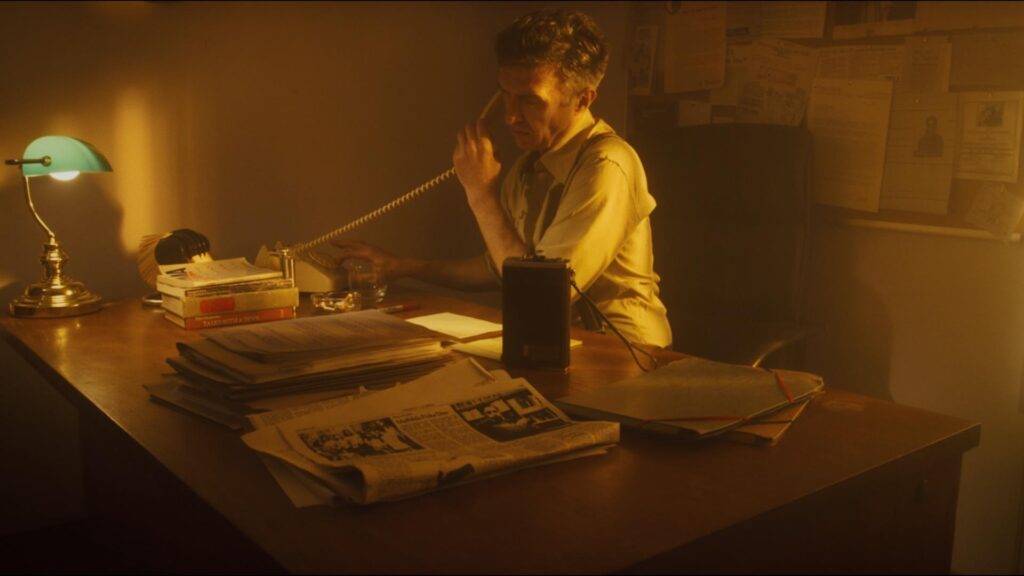
Masquerades of Research: Part I & II is a fictional film based on a true story, with Mark O’Halloran laying the infamous American sociologist Laud Humphreys. Through the biography and subjectivity of the researcher, it delves into the ethically fraught research methods of his infamous sociological study, Tearoom Trade: Impersonal Sex in Public Places (USA 1970). The film imagines Tearoom Trade as part of the 1960s avant-garde, re-reading its methods in the 21st Century as a cipher for the complex politics and masquerades of research itself. “Masquerade” is an avant-garde method in Humphreys’ research: a Trojan Horse infiltrating the core of the research enterprise itself. The question “why can’t sociology be avant-garde” at the end of Part I challenges the boundaries of “discipline” and indeed the social “disciplining” of researchers (Part II).
►︎ Thursday, 5 November 2026
►︎Particular Cases
Particular Cases
Architecture as research proceeds through particular cases: specific sites, situations, representations, material conditions, historical and lived encounters. The panel proposes particular cases as epistemological and political sites of architectural research. While case studies are often used to illustrate general ideas, particular cases establish their own ways of architectural seeing and making and thus of knowing and transforming the built world.
We refer to Boris Groys’ methodological introduction to “Particular Cases” (2016), in which he describes his writing as proceeding “from one particular case to other particular cases”, rather than applying a general theory to individual objects. He compares his approach to the trajectory of English as opposed to French law; particular judgments are informed by previous judgments, not derived from general principles. Crucially, the encounter with a particular work produces an impulse that he follows beyond the work itself, potentially transforming the gaze through which he subsequently perceives the world.
Yet particular cases do not simply present themselves to research. They are constituted through specific methods and practices of observation, representation, interpretation, and making, situated within disciplines, institutions, and struggles. Particularity thus concerns not only what is researched, but also how and from where research takes place.
The contributions include critical engagements with drawing and representation, knowledge produced through building itself, and practices of sharing and making public. They ask how specific encounters can expose what established ways of seeing obscure and transform how the built world is perceived. The question is therefore not how particular cases might be generalized, but what becomes knowable and what becomes possible by staying with particularity.
Florian Summa: After Alberti: Frictions with Reality
Dresden University of Technology, Germany
Following Alberti’s distinction between the intellectual conception and the physical execution of a building, architectural thought is commonly expected to reach completion before construction begins. This research challenges that assumption. It investigates an architectural practice in which the worlds of thinking (designing) and making (building) deliberately converge: the architect begins to build with her own hands—walls, doors and windows. These unscaled, built artefacts occupy a peculiar intermediate condition: As “living models,” they preserve the selective freedom of the architectural model while already becoming inseparable from the material, spatial, ecological and social realities of construction – turning them into tools for provocative inquiries into “reality.” The lecture explores the epistemic potential of such “particular cases” when architectural knowledge emerges through the act of building.
Beverly Engelbrecht: Drawing as a Research Methodology: Spatial Productions in the Context of Sex Work on Potsdamer Straße in West Berlin
Bauhaus-Universität Weimar, Germany
Focusing on various case studies situated around Potsdamer Straße in West Berlin, my contribution examines how drawings can function as a research method in architecture. Around 1970, Potsdamer Straße was known for its sex workers, who worked throughout the day, waiting for clients in front of the many bars, hotels, and clubs lining the street. In this setting, I investigate how sex workers and other actors in the red-light district produced, appropriated, and defended urban spaces – and how the state and civil society responded through strategies of control, welfare, and displacement. For each of my ten case studies, I created speculative colored-pencil drawings based on building records, interviews, photographs, and maps. The contribution argues that drawings can generate and question knowledge, making counter-/architectures of sex work visible.
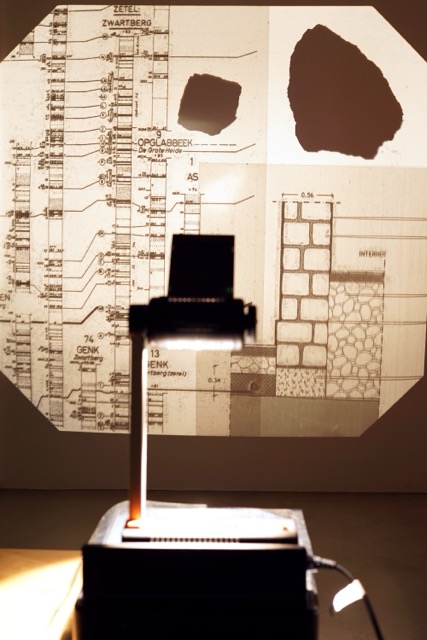
Silvia Susanna, Steffie de Gaetano: Re-enchanting technical representations. Matter entanglements revealing the invisibilizing power of the cross-section
Sapienza Università di Roma, Italy; Hasselt University, Belgium
Today, images shape knowledge as much as they convey state priorities and geopolitical forces. We examine encoded representations as modern instruments of (supra-)nation-forming political projects, focusing on the politics embedded in architectural and geological representations and the material and (un)worlding consequences they produce.
Analysing the cross-section as a tool of both abstraction and extraction, we show how mapping conventions are interwoven with logics of profit and exploitation. Spanning the strata of the walls of a colonial, fascist borgo in Sicily (IT) and the subsurface post-coal Campine landscape (BE), we argue that the standard grammar of these technical representations neutralises the imaginaries of an authoritarian project and an extractive fossil fuel regime. To render this invisibility visible, we propose re-enchanting the cross-sections, reintegrating neglected histories to suggest ways to interfere with dominant visualisations.
Susanne Bürner: The Center Will Not Hold: Shifting the Gaze
(Berlin, Germany)
Our perception is not only framed by our senses but also by what remains off-frame—the associated spatial and social context. Based on my artistic practice, I will discuss how the disruption of our gaze in turn impacts our perception of our environment, of space and ultimately of contemporary society. I will look at different artistic strategies of disruption—such as disappearance and diversification—as well as at methodologies and their mechanisms—such as mimicry, trompe-l’œil, or poetry. In this context, I address architecture as a core system of rigid physical and institutional boundaries to be challenged via its representation in art. By rendering graspable the limitations of our perceptional system, space arises for new ways of perception. I argue that disruption thus serves as a political tool, challenging not only formal but capitalist principles.
12:45–13:45
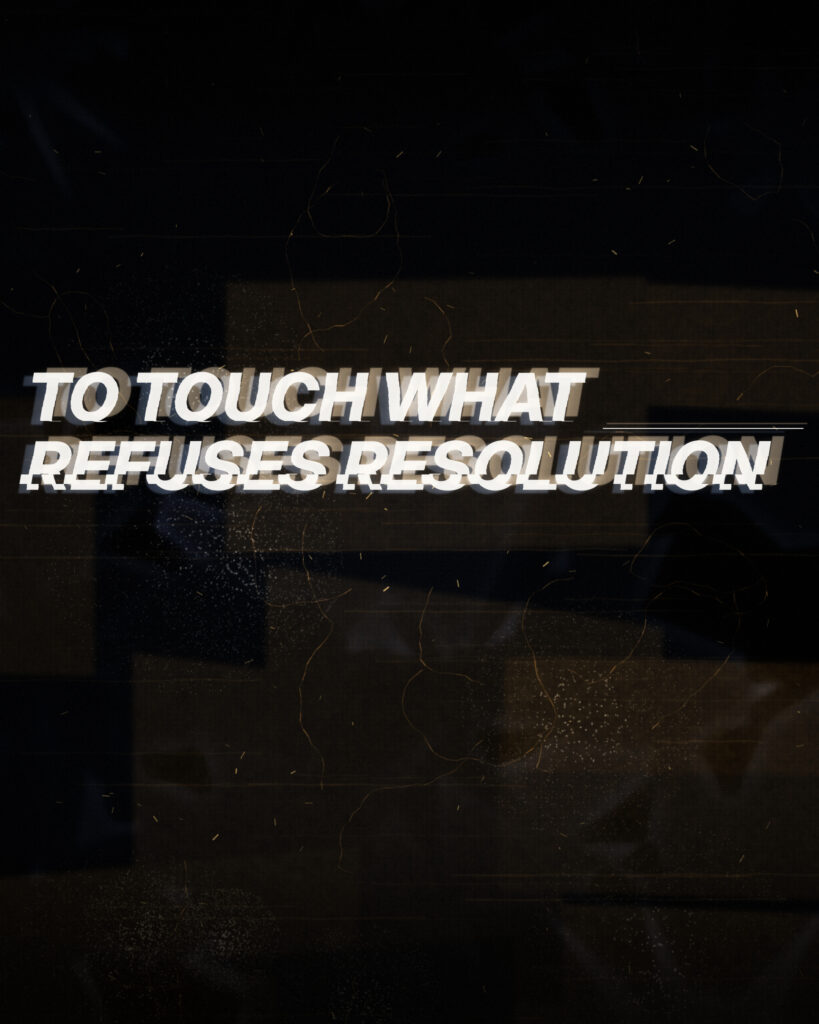
Paulina Larocca: To Touch What Refuses Resolution
University of Technology Sydney, Australia
“To Touch What Refuses Resolution” is a 60-minute participatory workshop for researchers, artists, educators, and practitioners who want to work with the difficult politics of research through the body, the hand, and the collective room.
Grounded in Metabolising Through Making (MTM), the workshop invites participants to press, weave, tear, sound, and witness tension as material. Cicadas act as epistemic companions: creatures who spend years metabolising underground before emerging together to disrupt the dominant sonic field. Their rhythm becomes a way to think about slow transformation, hidden labour, collective emergence, and refusal.
Participants will move through MTM’s cycle of Orient, Enact, Witness, Action, engaging contradiction and discomfort through making. The workshop creates a shared space for feeling what research politics does in the body, and for asking how embodied practice can reconfigure the ways we know, act, and respond.
►︎Experimental Setups: Invisibilities, Images and Imaginaries
Andrey Shental: Who Lies Inside an MRI Scanner? On the Limits of Generalisability and Cognitive Penetrability
Goethe University Frankfurt, Germany
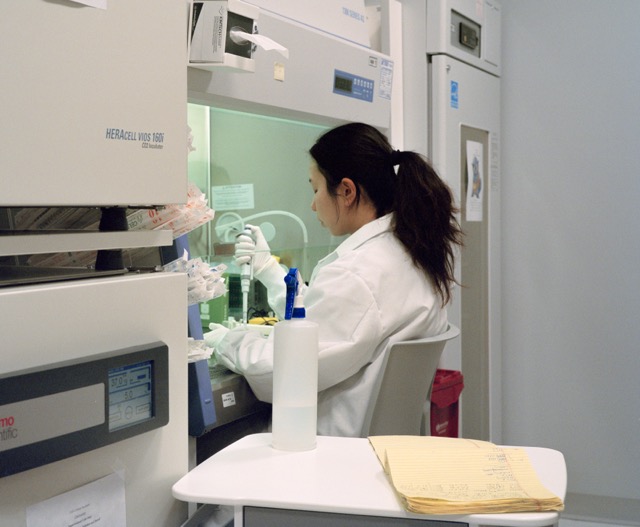
This paper begins with my participation in a colour-perception experiment inside an MRI scanner at Charité, Berlin. While I was personally motivated by 25 cents per correct answer, I was assured economic factors should be neglected. This denial frames the paper’s central questions around the politics of empirical research and the production of aesthetic subjectivity.
By reducing one’s reaction to a pure stimulus (Reiz), the experiment recasts subjective responses into a generalised subject, while erasing the economic conditions of its own measurement. Theodor Adorno, who developed his own anti-positivist but still naturalist aesthetics, insisted on necessity of empirical investigation for perceptible phenomena, while rejecting any identity between stimulus (Reiz) and response. Building on his critique of behaviourist conditioning and the role of cultural mediation, I would offer a dialectical reading of neurovisual research.
Danne Ojeda: Seeing Otherwise: RNA Microscopy and the Politics of Research Cultures
Nanyang Technological University, Singapore
This paper repositions RNA microscopy as a site of design-led knowledge production, examining how imaging ideologies shape evidence and identity within artistic research. Based on collaborations between NTU’s School of Art, Design and Media and the DaRE Lab, the project treats microscopic images as both roots—technical inscriptions of the unseen—and routes for speculative visual languages. Through workshops and practice-led visualisation, the research asks how imaging systems govern scientific aesthetics, how “inside-out” images redistribute agency, and which formats best translate lab data into public artefacts. Methodologically, the project evolves in two phases: Roots introduces microscopy and critical image literacy; Routes transforms datasets into narrative and speculative visualisations. The paper argues that RNA imaging, when approached through design, exposes their socio-cultural dimensions: proximities between molecular events and public perception; control in biomedical imagery circulation; and cultures of research redistributing authorship. It proposes an “aesthetics of accountability,” where the making of images becomes a way to account for the claims and responsibilities of RNA research.
Sophie Hamacher: Visio Cordis
Berlin, Germany/Maine USA
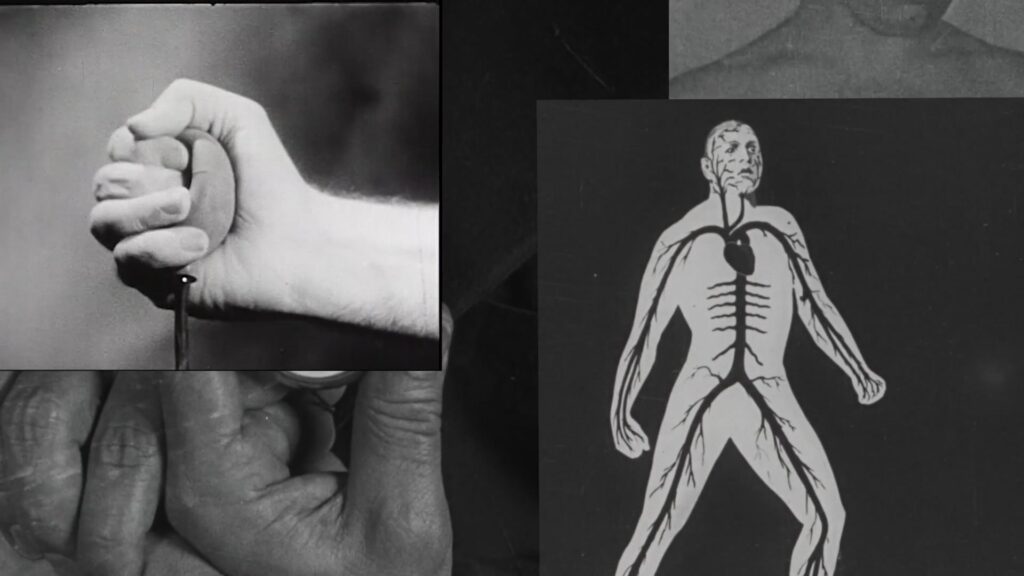
Visio Cordis is a 20-minute moving-image portrait of research—of the heart as a physical organ, and of the metaphors through which we navigate its emotional and cultural meanings. Rooted in an investigation of Takotsubo cardiomyopathy, also known as broken-heart syndrome, the project explores how medical imaging, affect, and machine vision co-produce contemporary understandings of the heart. It foregrounds the image as neither neutral nor self-evident, but as an aesthetic, ethical, and political construct that shapes research practice. As an audio-visual essay, Visio Cordis approaches research as a poetic and critical method, insisting on the uncertainty of looking in a world increasingly governed by automated sight.
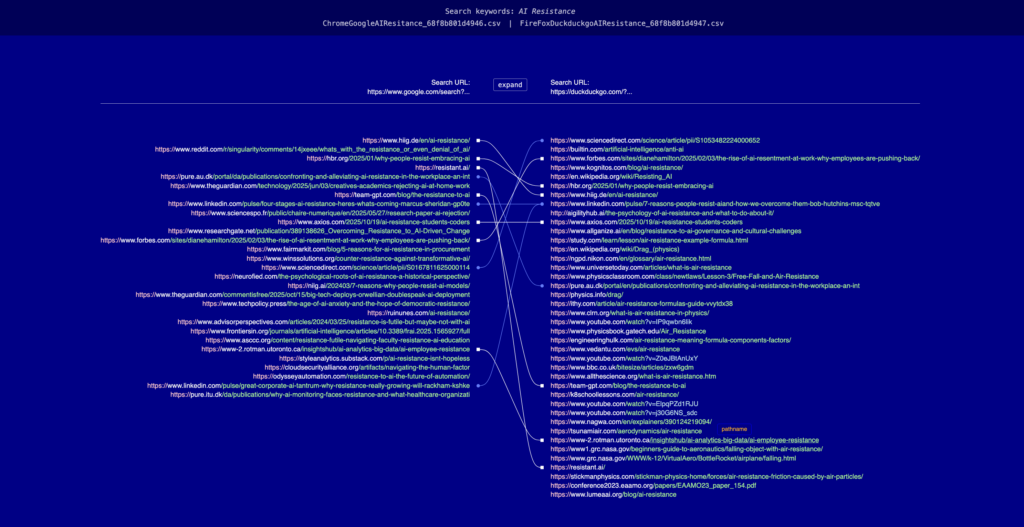
Renée Ridgway: The politics of (re)search: a bespoke platform for capturing, comparing and critiquing knowledge infrastructures of searching
DigitalxData Research Centre, LSBU, UK
►︎University in Crisis
Marie Hoop: Knowledge Policies in the Arts: The Institutionalization of Artistic Research in German-Speaking Countries
Muthesius Kunsthochschule/Leuphana University, Germany
While Artistic Research has already been established in many European countries over the past thirty years, it is still received controversially in German-speaking countries. As a relatively young research discipline, institutional structures and funding as well as career paths are often lacking, especially in Germany. In the presentation, I show empirical research on different organizational settings und funding policies for artistic research in Germany, Switzerland and Austria. Using a sociological field analysis based on the theory of Pierre Bourdieu, I analyze how the institutionalization of artistic research is permeated by powerful knowledge orders. The analysis of institutionalization processes reveals struggles for the legitimacy and recognition of artistic research and fierce battles over the power to define knowledge and research. Furthermore, by analyzing examples of artistic PhD programs and art-science collaborations, the presentation highlights the potential of performative artistic research practices for transdisciplinary academic knowledge production and for rethinking traditional knowledge orders in general.
Özgün Eylül Iscen: After Automation: Performing AI, Academic Precarity, and the Limits of Critique
Dresden University of Technology, Germany
Situating contemporary AI debates within the longer-standing crises of academia, this paper examines humanities research under precarious labor conditions, with particular attention to diasporic and migrant academics. Rather than treating AI as a force threatening something previously stable, it frames the vulnerabilities attributed to automation as symptoms of structural problems shaping knowledge production. The paper is a performative academic lecture drawing on Alenka Zupančič’s theory of comedy and mobilizing the comical as a mode of immanent critique. By staging contradiction rather than resolving it, the comical foregrounds the gap between ideals of scholarly autonomy, critique, and value and the material conditions of research. Reframing AI as symptom, the paper redirects critique from defending imagined ideals of academic integrity toward confronting the institutionalized inequalities shaping research today.
Mario Alberto Bracamonte Ocaña: Ghost researchers, governance, and diversion at the intersection of science and art
Universidad Autónoma del Estado de México, Mexico
This paper examines how governance practices within Mexico’s SECIHTI have restructured the relationship between scientific research, cultural policy, and institutional ethics. Three documented cases expose the material consequences of opacity and discretionary spending in state-funded cultural infrastructure. The Museo de la Luz in Merida reveals financial irregularities exceeding thirty million pesos, leading to the termination of its collaborative agreement with UNAM. The Centro Kalan in Mexico City, a multimillion-peso cultural complex, remains inaccessible to the public while official cost figures are inconsistent and allegations of nepotism in artwork commissions persist. A third case involves the private studio of artist Jimena Garcia Alvarez Buylla, whose architectural firm subsequently received the Kalan contract without open bidding, raising unresolved conflicts of interest. Against this backdrop, the author theorizes artist-researchers as structural ghosts: subjects made legible only through rankings and grant metrics, while precarious institutional conditions neutralize critical capacity. Research, the paper concludes, is never neutral; it is shaped by incentive structures that can serve democratic accountability or consolidate power.
►︎Learning from the Silent University
Learning from the Silent University
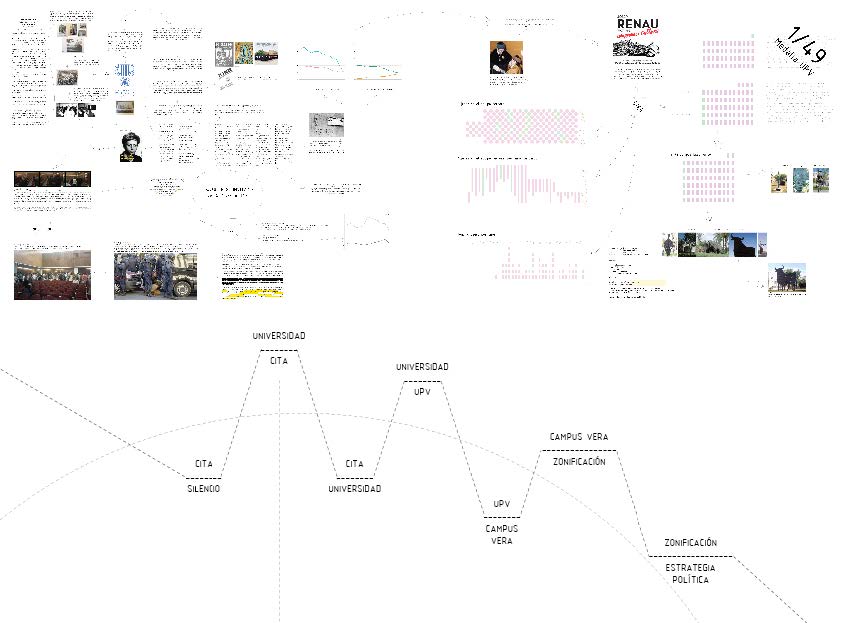
This workshop proposes to explore the multiple links between the politics of research and the current crisis of the university as an institution. Departing from the hypothesis that this crisis cannot be adequately addressed without confronting institutional mechanisms of inclusion and exclusion, visibility and invisibilisation, voice and silence within German universities, the workshop invites the Silent University Ruhr to discuss its institutional history and present activities. We assume that the university, as an institution, is in an existential crisis and must undergo practical transformation. With this workshop, we hope to open a forum that addresses the politics of teaching and research from the perspective of the “Silent University.”
Founded as a solidarity-based, autonomous knowledge-exchange platform in 2012 by the Kurdish artist Ahmet Öğüt, the Silent University is organized by displaced people and forced migrants. It is led by a group of lecturers, consultants, and research fellows, and operates as an educational platform outside the restrictions of migration laws, language limitations, and other bureaucratic obstacles.
The Silent University works with individuals who had professional careers and academic training in their home countries but are unable to use their skills or qualifications due to circumstances related to their migration status. It has active branches in Sweden and Germany. Previously, branches existed in Amman, Athens, London, Hamburg, and Copenhagen. A new branch is now being established in Turkey. Countering the exclusion of people seeking asylum from the system of education, the Silent University offers transversal pedagogical programs led by lecturers, consultants, and research fellows who are themselves displaced people and forced migrants. The platform operates without language restrictions or bureaucratic barriers.
It challenges the idea of silence as a passive state and explores its transformative potential through performance, writing, and collective reflection. These explorations seek to make visible the systemic failures—and the loss of skills and knowledge—that occur through the silencing of people seeking asylum.
Founded by the Impulse Theater Festival, Ringlokschuppen Ruhr, and Urbane Künste Ruhr, the Silent University Ruhr has established its space visibly in the center of Mülheim and is reinventing itself as an alternative Ruhr University for all those who have no or only minimal access to knowledge transfer and education. In recent months, numerous connections have been formed with initiatives and associations in the Ruhr region, as well as with the relevant municipal offices in the city of Mülheim.
Speakers: Bridget Ngencho Fonkeu (sociolinguist, consultant for the Silent University Ruhr, and initiator of the Silent University’s intercultural women’s empowerment network) and other members of the Silent University
Bridget Ngencho Fonkeu and other members of Silent University: in conversation with Jasmin Degeling and Elena Vogman
Silent University Ruhr, Germany
Abstract to be announced.
►︎Decentering Cores and Canons
Kervin Saint Pere Huarcaya: The Humboldt Forum as a Colonial Thought Space
Berlin, Germany
This paper proposes walking through Berlin’s Humboldt Forum not as a restored museum, but as a machinery of thought and participation: a Colonial Thought-Space that, through its architecture, organises what counts as civilised and historical, relegating represented communities to the condition of „objects of study.“ Drawing on the Warburgian concept of Denkraum, it examines how the baroque façade of the reconstructed Royal Palace (2013–2025) — with its golden cross and imperial sculptures — functions as a spatial system of coordinates that, together with the still-visible racial hierarchy of Adolf Bastian, founder of the Ethnological Museum, weaves together imperial nostalgia and colonial plunder as science and common sense: a space that turns the chaos of colonial violence into a rational place and silently justifies dispossession to secure the future of the collections. How does a colonial thinking take shape that renders imperial nostalgia rational and presents plunder as prudent and scientific?
Juliane Richter: The Politics of Proximity: Architectural Research on the “Tropics” in the GDR and the Scientific Department of Building in the Tropics and Abroad in Weimar
Bauhaus-Universität Weimar, Germany
This paper examines the Scientific Department of Building in the Tropics and Abroad (WB TAB), founded in Weimar in 1985, as a site of architectural knowledge production in the late GDR. Drawing on archival sources and interviews, it explores how research on the “tropics” was shaped by socialist internationalism, political alliances, and limited mobility. Using Cuba as its main case study, it argues that the tropics served less as a geographical category than as a political framework through which selected socialist and anti-imperialist partner countries became objects of research, training, and international engagement.
César Peña, David Vélez: Forging Modernity Otherwise: When a Metalworking Company in Medellín Contradicts the Global History of Design
Universidad de los Andes, Columbia
Forging Modernity Otherwise examines ElOspina, a Colombian metalworking company active during the first half of the twentieth century, to explore how alternative histories of modern design emerge from fragmented archives. Drawing on catalogues, photographs, surviving furniture, business records, and family memories, the paper treats archival discontinuity not as a limitation but as a productive method of inquiry. The study follows the trajectory of ElOspina’s metal furniture from its industrial origins to its later reappropriation by artists, revealing a historical tension between utility and the production of meaning. By tracing the movement of objects from foundry to home, archive, and artistic practice, the paper challenges universal narratives of design history and argues for a more plural understanding of modernity, knowledge production, and material culture in Latin America.
Eloy Neira-De la Cadena: Against Onenism, and the Coloniality of Knowledge Production
University of California, USA
I call “Onenism” the Western ideology aimed at ordering the world—and life—in terms of a single principle—theological, enlightened, or post-enlightened—which posits one-archical ordering principle—god, king, reason, truth, law, etc. Such ideology was structural to the colonization of the Americas, and today structures the coloniality of knowledge. One area where the university’s drive for onenism goes still unnoticed is methodological design and research pragmatics. Indeed, in this paper, I aim to discuss the research (un)methodological design I am carrying out in Peru concerning mestizaje, fusion, and the emergence of what is called New Andean Pop. Specifically, I will address the distinction that Latinx academics in the United States have been making between “fieldwork”—emphasizing its colonial connotations—and “homework,” which refers to our being part of the communities we study, our purported “objects of study.”
►︎Whose Diaspora?
Noit Banai: World Building Beyond the Nation State: Diaspora as Science Fiction
Academy of Fine Arts Vienna, Austria
This project examines the development of Diaspora Aesthetics, a newly established field at the Academy of Fine Arts Vienna, within a political climate shaped by rising right-wing populism, authoritarianism, and post-truth discourse. While Austria’s history and present are marked by cultural, linguistic, and ethnic diversity, contemporary nationalist narratives increasingly construct the nation as a homogeneous community rooted in exclusionary notions of identity. In response, the project proposes a methodology that understands diaspora not only as a historical and sociopolitical condition but also as a speculative framework aligned with the logic of science fiction. Diasporic experience—characterized by displacement, temporal rupture, hybridity, and the negotiation of multiple realities—shares key features with science fiction’s modes of imagining alternative worlds and futures. Reading diaspora through science fiction foregrounds the creative and critical world-building practices of dispersed communities, offering strategies to resist authoritarian constructions of identity, challenge manipulated notions of truth, and envision forms of belonging beyond the constraints of the nation-state.
Chanyoung Park: Mai Ling’s Accented Anonymous Collectivity as Diasporic Methodology
Academy of Fine Arts Vienna, Austria
This contribution takes as a case study the Vienna-based, anonymous artist collective Mai Ling’s online protest Not Funny! (2020), which responded to the racist parody of a Chinese correspondent during Covid-19 aired on the late-night show Gute Nacht Österreich. By focusing on the aesthetics of the ‘accented anonymous collectivity,’ the contribution will examine how the collective deconstructs the notion of ‘Asianness’ and bypasses racial taxonomy without losing multiplicity. Speaking with an accent is one of the most racially charged experiences for a diasporic subject. Yet, unlike a static identity marker, an accent “doesn’t say anything precise about the speaker’s social location or locution.” Thus, speaking with an accent resists simple labeling and stereotyping. This contribution will highlight how Mai Ling expands on the methodological potency of accents by amplifying its liminality and staged conflation by voicing collectively and anonymously.
►︎Epistemic Forces: Experiences Beyond Academic Norms
Katja Hettich: Embodied Ways of Knowing: Unsettling Research Norms through Cripistemology
Bauhaus-Universität Weimar, Germany
How do embodied experiences shape what counts as knowledge? This paper introduces cripistemology as an approach for questioning normative assumptions underlying dominant epistemologies. Taking blindness as a case study, it critiques the longstanding reliance on visual metaphors that equate seeing with knowing and blindness with ignorance. Rather than framing blindness as a deficit, the paper explores it as a distinct mode of sensory engagement with the world that reveals the embodied conditions under which knowledge is produced and validated. It argues that disability studies provide conceptual tools for examining how research cultures privilege particular ways of knowing and for opening interdisciplinary dialogue.
Noa Kurumi Nishizawa: Beyond Hearing: Multisensory Politics and Brass Band as a Site of Expanded Musicality
University of Salford/Royal Northern College of Music, UK
Linda Luv: Becoming Cyborg: Care, Artistic Research, and the Politics of Motherhood as Performance
Frankfurt, Germany
“Becoming Cyborg” is a lecture performance developed from the artistic PhD The Other|Mother. Everyday Care as a Performative Practice of Troubling that explores motherhood, care, and artistic research as embodied, relational, and politically situated practices. It asks how performance can reframe care, dependency, and exhaustion as epistemic forces. Through the figure of the M:Other – a hybrid of mother, other, and cyborg – it proposes feminist strategies of survival under conditions of structural overload. Within the performance, the physical components of the dissertation are activated as performative objects. Combining text, action, sound, and scores, the work reframes research as a material, affective, and collective practice. By foregrounding embodied knowledge and the politics of research formats, „Becoming Cyborg“ advocates transformative modes of knowledge production.
Dori Griffin: Praxis, Positionality, & Ways of Knowing
University of Florida, USA
This paper examines canon and heritage through visual ethnography, pedagogical praxis, and design fiction, asking: how do my educational roots inform my design-educator positionality? Raised homeschooled on experiential learning, Bauhaus principles felt natural[ized]. Universal languages of form/function resonated with my prior knowledge systems. I explore this multivalent heritage in process-based experiments. Teaching design history, I root students in pluralistic, global references. We ask: how do humans make sense through designed systems and artifacts? Students contribute primary research to a public archive, investigating their own culture—or respectfully exploring others‘. This collective work is radical, politically and disciplinarily. How might we imagine a future where knowledge, archives, and historical narratives are credible, accessible, and pluriversal? Drawing on my positional context and the radical archiving work I do with students, I hypothesize such a future.
►︎Towards a Proto-Science of Architecture?
Achim Hahn: Architecture and the Lifeworld: Aspects of a Phenomenological-Hermeneutic Understanding of Architecture
Dresden University of Technology, Germany
What is the human being whom we must observe and describe in the practical domains of dwelling, designing, and building? Human beings primarily perceive architecture as a familiar practical object (Umgangsding) within their lifeworld and experience its significance for their own embodied needs directly. All goods of life are a response to this fundamental human situation: architecture is a good of life. What kind of reflection on their own self-understanding does this entail for architects? This paper aims to elucidate the relevant relationship between lifeworldly and theoretical attitudes.
Sam Jacoby: Architectural Judgement and the Scientific
Royal College of Art, UK
A first orientation of Western architectural judgement towards the scientific emerged in the eighteenth century, with the crisis of classical authority and the need to legitimise past and future practice. I will outline how changing understandings of “the scientific” have since shaped architectural reasoning and practice. I will then discuss how design research arose from the need to recognise design thinking and practice as discipline-specific forms of rigorous enquiry, while distinguishing this from ordinary practice. Research makes knowledge explicit and accountable, allowing it to be systematically examined, compared, and shared. As social and environmental pressures are increasingly defined in scientific terms, architectural practice and practice-based research have become more scientific. Yet the scientific is only one dimension of architectural judgement, along with spatial, social, cultural, technical, environmental, and historical knowledge. The challenge for architectural research is to bring these heterogeneous forms of knowledge together in terms specific to architecture.
Dulmini Perera: Taking Different Practice-Worlds Seriously: Architectural research and the ontological turn
University of Limerick, Ireland
Architectural research has long occupied a contested position within academia, struggling to articulate and claim value for the different ways in which practitioners generate and work with knowledge. In doing so, it has continually negotiated its relationship with the “scientific,” both implicitly and explicitly—from the rationalisation of design methods in the 1960s, through social constructivist critique, to the reflexive approaches associated with design research. Yet, within neoliberal academic evaluation frameworks, it is questionable whether established ideas in design research adequately acknowledge and evaluate cosmological differences in knowledge production and exchange across diverse practice sites. Against this background, I turn to recent accounts of (non-modern) science emerging from the “ontological turn,” particularly in Science and Technology Studies(STS) and anthropology, which reconsider the role of the observer, the production of descriptions, and the co-construction of knowledge. Bringing these ideas into dialogue with recent explorations of architectural research, such as “pragmatist approaches” and “architectural behaviorology,” I explore the possibilities for radically reframing architectural research and its capacity to attend to cosmological differences across practices.
Skender Luarasi, Llazar Kumaraku: Between the (Scientific) Model and the Precedent: Research in architecture under the pressure of the “scientific pragmatics”
POLIS University, Albania
What does it mean for architecture to be scientific? The discipline’s relationship to science—its desire to adopt scientific rigor—can be traced back to the Enlightenment. An early example of such aspiration is Claude Perrault’s distinction between natural and arbitrary beauty. The former arises from an “apparent […] balanced correspondence of size, number, disposition, and order,” while the latter is deemed agreeable “merely by custom.” For Perrault, natural beauty aligns with a scientific model, whereas customary beauty rests on historical precedent. Colin Rowe was perhaps the last major figure to adopt such methodological distinction in the study and analysis of architecture, until the linguistic and cybernetic, and – later – the digital turn(s) did away with the customary (or attempted to do so). Scientific pragmatics have sought to subsume precedent under the authority of the scientific model, with artificial intelligence standing as the apotheotic example of this ambition. Can architecture truly dispense with the customary, with precedent, and if not, as this paper argues, why? To claim that architecture is scientific is, paradoxically, to demonstrate the impossibility of architecture ever being fully scientific.
Matteo Pasquinelli: N-1: Dimensionality Reduction Across the History of Cultural Techniques, Information Technologies, and AI
Ca’ Foscari University of Venice, Italy
One of the least investigated aspects of human cognition is the capacity to integrate the dimensions of experience, space and time, into a perceptual continuum and conversely to dis-integrate them, that is to undo the continuum and translate dimensional features into various cultural artefacts. Thousands of years ago, cave painting constituted the first ‘picture plane’ via a reduction of dimensionality, by flattening the experience of the world onto the crude surface of a rock. Ancient humans started learning a model of the world from a flat representation of it. Later, written language emerged as a sequence of signs to replace these pictures as well as the sequence of sounds in oral communication. Dimensionality transformation belongs to all cultural techniques and it can be traced also through the more recent development of visual arts, optical media, information technologies, and AI. Whereas it is customary to narrate the history of AI as the simulation of thinking through calculus, it is often forgotten that AI is also part of the long history of cultural techniques for spacetime representation.
►︎ Friday, 6 November 2026
►︎Embodied Encounters: Subjectivity, Care, and Relational Knowledge
Nikolay Barzakov: Research as Encounter: How Bodies Negotiate Influence
South-West University, Bulgaria
Performers negotiate what is allowed to influence them in a live situation. Somatic consent operates as the ongoing decision of what to admit or refuse from a space, partner, object, audience, or task. Treated as an epistemic procedure, it generates knowledge through the body being altered by an encounter. Attunement names this capacity: remaining open to the present without losing structural coherence.
Within practice-as-research contexts, institutional pressures to produce legible outcomes train the opposite habit. Pre-emptive stabilisation locks timing, geometry, and relational settings in advance, foreclosing what the live event can propose.
Studio journals and rehearsal protocols reveal three recurring patterns through which performers refuse influence: clinging to a prior image of themselves displacing the one the situation produces; subordinating the live encounter to a predetermined compositional frame; and correcting a somatic consequence before it has time to register as information. Somatic consent functions as a diagnostic tool for locating these refusals and redesigning the conditions that generate them.
Martin Leibinger, Giuliana Marmo: The Biennial of Care: Politics of Aftercare in Project-Based Artistic Practice
Bauhaus-Universität Weimar, Germany
The “Biennial of Care” is an arts-based action research process. We contribute to the current debate on “hidden costs of care” and the “careful turn” in socially engaged art. While cultural events like biennials and festivals often feature process-based socially engaged work within local communities, they usually operate on a project-based framework with defined goals and a definite end. Support structures end while vulnerabilities, needs, and expectations in social environments persist. In Chemnitz, we currently investigate the effects of the European Capital of Culture on the local creative scene and on the public that became actively involved. We close a gap, refocusing the discourse and the framework of evaluation from “legacy” to “care” in the aftermath of large events. The Biennial of Care is conceived as an evolving methodology over the longer term. We create a “Mobile Care Unit” as an archive and toolbox, designed to travel across different large-scale cultural events.
►︎Contested Sites: Spatial Struggles
Lori A. Brown: Politics of Feminist Research
Syracuse University, USA
Feminist research has real agency to make visible what can often be insidious structures of power, like laws and policies that exert immense influence in shaping the built environment; and in particular, the physical landscapes of reproductive healthcare of abortion clinics and birthing facilities in the United States. Since the repeal of Roe v Wade in 2022, with more states across the U.S. unabashedly hostile towards women and women’s healthcare, reproductive healthcare has become one of the primary sites where women’s rights are differentiated depending upon the geography of where one lives.
Research and advocacy in reproductive healthcare have become more challenging work, paralleling a woman’s oftentimes inability to access safe and science-based healthcare. Given these restrictions, politically focused research is under assault in the U.S., even more so if this research focuses on women. Architects are crucial but often, unexpected partners: abortion clinics need architectural expertise, lawyers need architects to help visualize space and interpret building codes, and healthcare providers need architects to design safe and supportive spaces.
Monica Tușinean: Research in the Debris: Disrupting Architectural Paradigms Through Design Phenomenographies
University of Stuttgart, Germany
This paper advances artistic and design-driven research as a dissident practice capable of unsettling the hegemonies governing architectural decision-making. Situated within industrial ruins of the former Eastern Bloc, it confronts the cultural amnesia that has rendered these sites politically inconvenient and institutionally invisible, places once inscribed with the utopian promises of collective futurity, now dissolving and at risk of being obliterated by predatory real estate practices.
Through hybridised phenomenographies (hand drawings, filmic overlays, and atmospheric vignettes), the research excavates submerged layers of grief and embodied experience that conventional methodologies suppress. Grounded in autoethnographic situatedness, it positions the researcher as an implicated subject rather than an external authority.
Design-driven inquiry can reclaim the ruin as a politically charged epistemic space, one where silenced histories are reactivated, and architecture is compelled, to listen before it builds.
►︎Panel Discussion: Urban Studies in Limbo: On (Un)certainties of Re-Searching Authoritarian Contexts
Panel Discussion: Urban Studies in Limbo: On (Un)certainties of Re-Searching Authoritarian Contexts
This is text
David Gogishvili: Input 1
University of Lausanne, Switzerland
Uncertainty forms the core of research, as venturing into the unknown involves unpredictability and potential failure, aggravated by funding, erratic scientific agenda-setting, and broader political contexts. While research always entails maneuvering within heightened uncertainty, the panel examines the particularities of researching authoritarian contexts. Notwithstanding differences between authoritarian settings, they share traits making research unpredictable, ranging from difficulties building trust and lack of data to ethical dilemmas balancing field access against risks for participants or oneself. The panel offers a platform for exchanging experiences on navigating research under such conditions.
Drawing on Hungary, Russia, Georgia, and Serbia, the panel discussion highlights specific uncertainties to deepen understanding and exchange strategies. Since most panelists research from the outside, we also critically reflect on our positionality and responsibilities as researchers.
Danijela Milanović Rodić: Input 2
University of Belgrade, Serbia
Uncertainty forms the core of research, as venturing into the unknown involves unpredictability and potential failure, aggravated by funding, erratic scientific agenda-setting, and broader political contexts. While research always entails maneuvering within heightened uncertainty, the panel examines the particularities of researching authoritarian contexts. Notwithstanding differences between authoritarian settings, they share traits making research unpredictable, ranging from difficulties building trust and lack of data to ethical dilemmas balancing field access against risks for participants or oneself. The panel offers a platform for exchanging experiences on navigating research under such conditions.
Drawing on Hungary, Russia, Georgia, and Serbia, the panel discussion highlights specific uncertainties to deepen understanding and exchange strategies. Since most panelists research from the outside, we also critically reflect on our positionality and responsibilities as researchers.
Erika Nagy: Input 3
CERS, Institute for Regional Studies, Hungary
Uncertainty forms the core of research, as venturing into the unknown involves unpredictability and potential failure, aggravated by funding, erratic scientific agenda-setting, and broader political contexts. While research always entails maneuvering within heightened uncertainty, the panel examines the particularities of researching authoritarian contexts. Notwithstanding differences between authoritarian settings, they share traits making research unpredictable, ranging from difficulties building trust and lack of data to ethical dilemmas balancing field access against risks for participants or oneself. The panel offers a platform for exchanging experiences on navigating research under such conditions.
Drawing on Hungary, Russia, Georgia, and Serbia, the panel discussion highlights specific uncertainties to deepen understanding and exchange strategies. Since most panelists research from the outside, we also critically reflect on our positionality and responsibilities as researchers.
►︎Access, Control, Constraint
Dieter Lesage: Archive, Broodthaers, Catalogue, Dockx
Royal Institute for Theatre, Cinema & Sound, Belgium
With their work Projet pour un livre. Projet pour un film, Nico Dockx and Helena Sidiropoulos realised in 2009 the production of an altered version of an unpublished catalogue to the exhibition Marcel Broodthaers. L’homme de lettres et la conquête de l’espace, which had taken place at the Palais des Beaux-Arts in Brussels from March 9 until June 10, 2001. The catalogue had not been published as a result of discussions with the rights holders concerning the permission to use the images of works and documents in the catalogue. While researching the institution’s archives in 2009, Dockx and Sidiropoulos rediscovered the model of this catalogue. Projet pour un livre. Projet pour un film is the result of their decision to publish the catalogue at last, or at least to produce a work of art that would testify to the existence of this unpublished book. Wit its large number of black non-images, their work looked like a visually loud protest against the fact that the rights holders had forbidden to use a lot of images. One could think of it as a Broodthaersian Open Letter accusing the excesses of the institution of copyright, the question being not whether the author is dead, but whether the author is dead long enough.
Tessel M. Bauduin, Maria Suarez Caicedo: “Negative travel advice” from Collectors: issues of access in research
University of Amsterdam, Netherlands
In this paper we examine issues of access in universities and cultural educational institutions, showing how institutional gatekeeping shapes who enters academic spaces and contributes to knowledge production. We adapt Martínez Colá’s mentoring model—Collector, Night Light, and Ally—to institutions to analyze how they include, exclude, or condition marginalized groups and non hegemonic knowledge sources. One case study examines museums with problematic collections, facing questions of restitution, repatriation, and repair, as oscillating between Collectors and Allies. Another explores research with Latin American communities in violent or officially “high risk” areas, where researchers positioned as Allies are constrained by blanket institutional policies. Together, these cases shed light on hegemonic and counter hegemonic frameworks shaping art and heritage research and teaching within European institutions.
Space | Politics | Methods Lab/ Collective: Doors of Oblivion
National Technical University of Athens, Greece
Doors of Oblivion examines doors of the National Technical University of Athens’s historic campus — home to the School of Architecture — as material thresholds through which authoritarian neoliberalism is enacted and normalised. Fifty years after the campus gate was destroyed by the junta tanks in 1973 and became a landmark of anti-dictatorship struggle, new pressures emerge. Surveillance and controlled access are being inserted in the university, tied to the commodification of higher education. Through situated study of selected doors, regarding their use, neglect, repair and contestation of meaning, we trace how material arrangements regulate movement, shape subjectivities, and reorganise institutional memory. We ask how doors that exclude (our bodies and memory) might be reclaimed for commoning. Viewing thresholds as sites of change, we treat doors as borders, sites of desire and agents of power. Our methodology includes analysis and on-site intervention. Beginning in spring 2026, collective mapping and wandering, activating doors as sites of encounter and political imagination, and gathering stories from students, staff and researchers are being conducted.
►︎Productive Landscapes: Extractive Tendencies vs. Alternative Epistemologies
Sina Hensel: Oceanic Colour Practices: Negotiating Epistemic Agency and More-than-Human Labour
Critical Media Lab FHNW Basel / University of Arts Linz / Humboldt Universität zu Berlin
Colour from microalgae and cyanobacteria carries the material memory of the waters it has lived through. It bears witness to cohabitation, environmental stress and contamination.
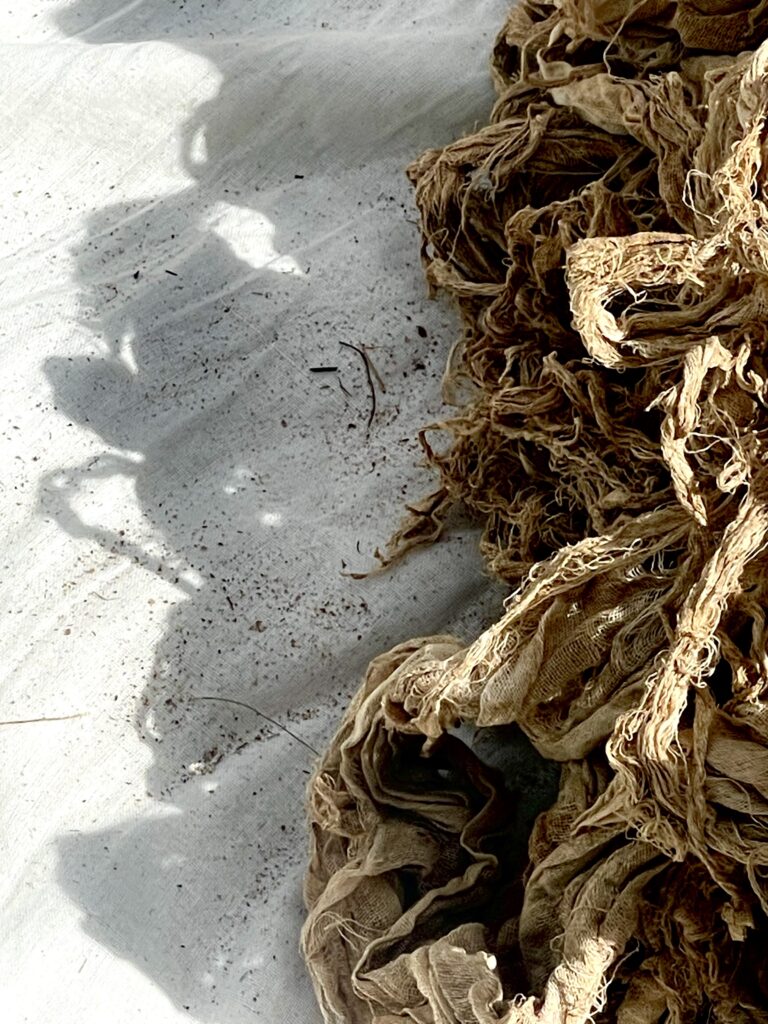
Trained as a painter, my artistic practice and PhD research explore growing and harvesting colour from microalgae and cyanobacteria in experimental settings. This work becomes a site for rethinking natural-scientific knowledge practices by privileging the agency of these organisms over reproducibility or rigid protocols. Colour becomes both material and methodology: an ecological trace and multispecies storyteller. Drawing on feminist science and decolonial scholars, my work situates scientific knowledge alongside artistic, poetic and relational modes of engagement. I further wonder how the industrial scaling of microalgae and cyanobacteria farms, and the language built around it, normalise extractive practices. Through artworks, collaborative workshops and writing, I develop embodied, sensory methods that challenge disciplinary norms and explore more ecological, relational and ethical ways of knowing.
Stefano Morosini: Governing the Return of Wolves: EU Environmental Research Funding, Human–Wildlife Conflict, and the Politics of Conservation from the EEC to the Age of Populism
Università degli Studi di Bergamo, Italy
Over the past fifty years, EU environmental research has played a key role in shaping biodiversity conservation. The return of the wolf (Canis lupus) across Europe, enabled by legal protection and programmes such as LIFE and Natura 2000, provides a revealing case for examining the politics of research. This paper analyses how EU funding has produced not only scientific knowledge but also governance models and political narratives around large carnivore conservation. Drawing on historical policy analysis and the concepts of “civilizing nature” (Wöbse) and state legibility (Scott), it argues that the wolf has become a governance object through monitoring, management, and coexistence strategies increasingly challenged by nationalist and populist critiques. The paper asks whether EU-funded environmental research can mediate conflicts over biodiversity or whether it risks reinforcing the political polarisation surrounding nature conservation.
Ismini Gatou: Cement and Limestone: Toward Embodied Epistemologies Across Human and Nonhuman Plateaus
University of Thessaly/ Research Centre for the Humanities, Athens, Greece
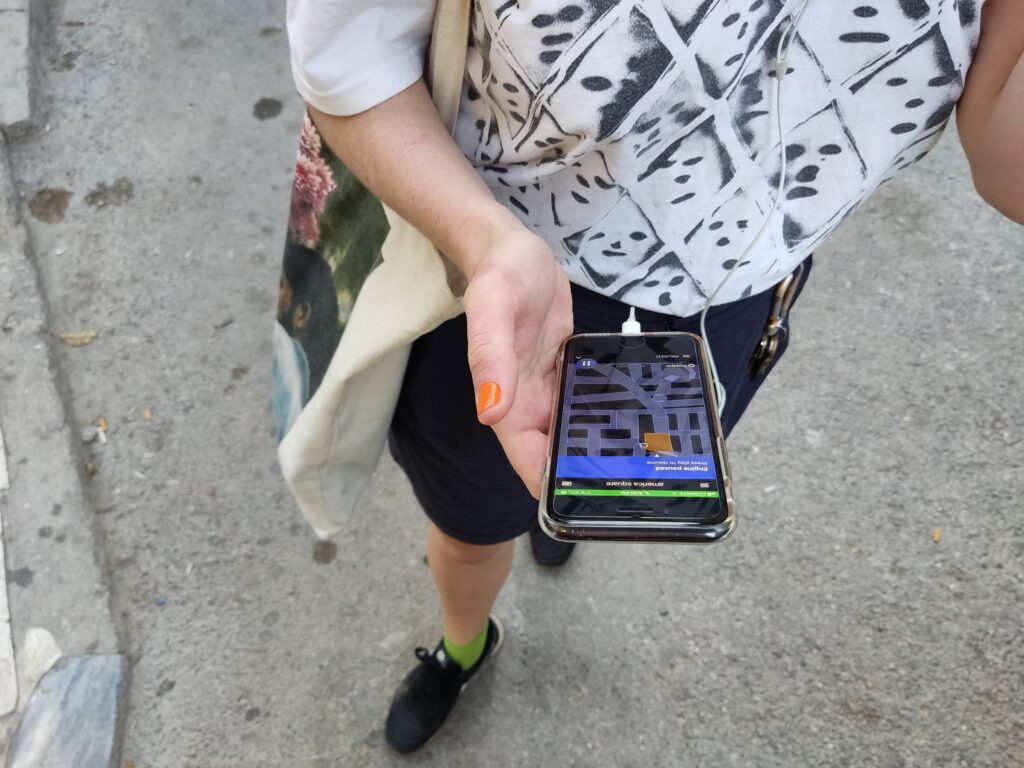
This presentation draws on my research-creation practice, which combines sensory ethnography and technologically mediated methods in order to explore how embodied knowledge emerges across human and non-human plateaus. In the multicultural area of Amerikis Square in central Athens, I collaborated closely with my interlocutors to co-create spatial and relational understandings through a methodology I developed called narratives-in-motion. Some of the research material was later transformed into an interactive audio walk located in the same neighborhood, inviting others to listen, move through it, and re-perform the emerging hybrid space. During an artistic-research residency on the island of Chios, I developed aepos: I found seashells on a plateau, a sound-based performative work that carries human and non-human presences across the limestone landscape of the Aepos mountainous terrain. In both works, I approach research as a practice of co-existence, care, and attention, and as a space in which knowledge emerges through embodied, situated, and shared encounters.
Esteban Pérez: Volcanic Futures
Berlin, Germany
Volcanic Futures is a 10-minute video essay. The work weaves my personal experience of growing up in the Andean region with a feeling of estrangement from today’s planetary condition. Structured into four parts, it begins by questioning the meaning of the term “Andean,” then reflects on how this landscape has shaped my subjectivity and perspective as an artist. The third part turns to the contemporary global condition: wars, artificial intelligence, and the climate crisis, framed through capitalist science fiction, the ideology promoted by billionaires who imagine an interplanetary project of a humanity without a world. The final section proposes a speculative return to ancestral Andean ways of knowing, which see nature as a world rather than a resource, imagining a future based on reciprocity with this sacred web of life.
The piece brings together personal photographs of mountains I have taken since my youth, YouTube footage from tech companies seeking to colonize Mars, archival images of the Pichincha volcano eruption, and scientific illustrations of the Andes by European explorers such as Alexander von Humboldt.
►︎Russian Imperialism: Infrastructures, Fragile Bodies, Erased Memories
Antonina Stebur in conversation with Olexii Kuchanskyi
Berlin, Germany; University of Basel, Switzerland
How is Russian imperialism structured, sustained, and transmitted? How does it persist across different political regimes and historical ruptures? And how can art help us trace its mechanisms?
Focusing on russian imperialism, Olexii Kuchanskyi and Antonina Stebur explore these questions through three interconnected dimensions: infrastructure, the fragile body, and the erasure of memory. Moving between art history and contemporary artistic practices, the conversation interweaves different methodologies, tracing how colonial relations were experienced and subverted across different scales.
►︎Frictions of Solidarity: Critical Histories, Insurgent Methods
Charlotte Grace: Critical Solidarity and (geo)Political Defeat
Royal College of Art, UK
This informal presentation will speak to the complex landscape of solidarity research through my ongoing academic and activist work with the Kurdish Freedom Movement (KFM). In particular, my PhD, ʻSpatial Labour and the Politics of Place in Rojavaʼ, which explored the sociospatial dimensions of the Rojava Revolution, tries to work from a position of Critical Solidarity (Hevaltî) with the region’s aims and claims. To do so, I refracted the KFM’s own concepts through spatial frameworks and local case studies, using a range of co-pedagogic, auto-elicitation methods to collect and interpret fieldwork data. This led to the development of the post-doctoral Impact project ʻA Spatial Contract for Rojavaʼ, which sought to activate my research into useful, propositional outcomes. I will speak about the stopped-start that the recent Syrian “reintegration” process has created for this project, where it leaves me as a solidarity researcher, and what it means to research revolution as it (un)folds.
►︎Situated Epistemologies: Decoloniality, Race, and Global Knowledge Production
Abhishek Hazra: An inauthentically decolonial Southern subject, anxiously ascends and descends a stairway
Srishti Manipal Institute of Art, Design & Technology, Bangalore, India
Through simple, repeated acts of regression and progression, this multi-modal lecture-performance activates the iconic stairways of the Weimar Bauhaus while reflecting on the politics of Decolonial Theory. In a tangential register, it highlights the disturbing irony that in parts of the Global South, the emancipatory discourse of Decolonial Theory is increasingly harnessed to infrastructures of unfreedom. Drawing on speculative scenarios rooted in Abhishek’s longstanding interest in non-institutionalised forms of knowledge production, the performance also enacts the contradictions of representation at conferences where the Global North invites the Global South. In the present conjuncture, Decolonial Theory, despite its institutional capture, or perhaps because of it, is arguably a prevailing paradigm for critiquing the colonial legacy. But does this imply that a Southern researcher-artist should, almost by default, feel affiliated with its program of epistemic delinking from the West?
Tam Nguyen: Ghost and Rigor: Militarized Transdisciplinarity and Affective Solidarity as Ethical Otherwise
Goldsmiths, University of London, UK
This research traces the history of transdisciplinarity within the arts and humanities, starting from the co-option of visual and cultural research in US military operations and national defense during the Cold War. Positing that such a co-option exemplifies an emergent transdisciplinary impulse, it argues that, within this development, Third World culture was assimilated into a false alliance with Western epistemology that sustained the life-force of humanities institutions during the postwar period. Regarding this, the research pays particular attention to ethnography as a beyond-humanities research method within the field of Southeast Asian art history, specifically how this gesture further institutionalizes the militaristic aspect of transdisciplinarity. In response, it theorizes the notion of “ghostly transdisciplinarity,” which points to art writings and other forms of theoretical works across marginalized socio-cultural contexts, as a way to demilitarize knowledge production, challenge extractive (institutional) alliances, and reconstitute ethical transdisciplinarity that merits affective engagements.
Fabiana Oliveira Heinrich: Against neutrality, within ideology: from Bauhaus to the Global South, a perspective on project and research methodologies in the Design Field
Federal University of Rio de Janeiro, Brasil
This paper challenges the assumption that project and research methodologies in the Design Field are neutral and universally applicable tools. Drawing on critical theory and historical materialism, it argues that methodologies are historically and ideologically embedded in capitalist societies. From the eighteenth-century “culture of the project” to the Design education institutionalization through the Bauhaus and later the Ulm School, methodological frameworks have shaped how design projects are organized while reproducing imperatives of efficiency, standardization, and market alignment. Grounded in the work of Marx, Mészáros, Konder, and Vieira Pinto, the paper understands ideology as the expression of social relations rather than false consciousness. Combining analysis with reflections from teaching and advising in the Design Graduate Program at UFRJ – Brazil, it examines practices from a Global South perspective and argues for an understanding of design as socially situated praxis.
Hito Steyerl, Oleksiy Radynski: Where Russia Ends (2024)
Akademie der Bildenden Künste München, Germany
Kyiv, Ukraine
The first-ever trial in a German court related to a war crime committed during a Russian invasion of Ukraine is taking place at the moment. But the “crime” in question is not the mass aerial bombing of the civilian population, the abduction of Ukrainian children, or the occupation of a nuclear power plant. It is not even a trial against a serviceman in the army of the aggressor. It is a trial against a member of the Ukrainian military who stands accused of blowing up the Nord Stream pipelines. Nord Stream is widely seen as a piece of infrastructure that made the Russian invasion of Ukraine possible in the first place. It also delayed the necessary energy transition in Germany, causing new spikes in energy prices as well as new dependencies, which in turn contribute to a sharp rightward turn in German politics. Ongoing state subsidies for new German drone start-ups producing often defective but overpriced products, as well as for outdated tanks, at the expense of education and culture, add to a widening divide between rich and poor.
Screening of Where Russia Ends (2024, Director: Oleksiy Radynski, Development: Philipp Goll & Oleksiy Radynski, Producer: Lyuba Knorozo). Introductory talks by Hito Steyerl and Oleksiy Radynski. Discussion moderated by Elena Vogman.
Oleksiy Radynski, Lyuba Knorozok: Special Operation (2025)
Kyiv, Ukraine
Special Operation (2025, Ukraine/Lithuania,65 min., Colour & Black/White, Director & Screenplay: Oleksiy Radynski, Editing: Taras Spivak, Sound Design: Vladimir Golovnitski, Producer: Lyuba Knorozok).
When Russian troops occupied Ukraine’s Chornobyl Nuclear Power Plant on 24.02.22, in the very first hours of their all-out invasion of Ukraine, their activities were documented by CCTV cameras. They turned the territory of the nuclear power plant into a military base in an attempt to occupy the Ukrainian capital of Kyiv, located just a hundred miles away. Special Operation is based on that footage, recorded at the site of the worst nuclear disaster in history, creating an almost disembodied examination of military logic.
Discussion with Oleksiy Radynski and Lyuba Knorozok moderated by Olexii Kuchanskyi.
►︎ Saturday, 7 November 2026
10:00–10:45
11:00–12:00
Clementine Butler-Gallie, Luise Leon Elbern: Desire, Dissidence, and Path-Making: Walking as Artistic Research
Berlin, Germany; Bauhaus-Universität Weimar, Germany
Walking always begins with a pull: a quiet impulse that aligns us toward an elsewhere. In urban contexts, this pull sometimes materializes as a trace, a desire path; those informal, crooked lines in the grass or gravel that reveal how people move through space differently from prescribed routes. This pull is expressed by a desire.
This contribution combines the format of presentation, drawing on the year-long program of artist-led walks titled Dissident Paths co-curated for nGbK, Berlin (2025-26), with a walk-based workshop. Through which we will explore desire and dissidence as forces shaping how bodies move, encounter one another, and imagine alternative possibilities for public space. We will examine how walking redirects attention, creates social, spatial, and epistemic relations that open spaces of access engagement, and alternative or unplanned uses of built environment, and therefore new knowledge.
12:00–13:00
10:00–12:00
Lilla Kammermann, Lilla Varga: Tripping on Modernist Monuments
Bauhaus-Universität Weimar, Germany
The Tripping on Modernist Monuments artistic research project explores how monuments—whether intentionally or unintentionally—make societal conflicts visible, and how expertise from monument preservation, activism, art, and engineering can be integrated. Rather than focusing visually pleasing representations, the project engages with built heritage in its raw reality, its current use, and its entanglement in postsocialist politics.
This walk demonstrates how student-led, collaborative research can function as a counter-hegemonic academic endeavor that reimagines the methodologies of knowledge production. Reflecting on the time that has passed since the XV. Bauhaus Colloquium, it traces heritage dating back to the era of the I. Bauhaus Colloquium, situating it within the broader context of knowledge production across the former Eastern Bloc and Yugoslavia.
10:00–13:00
Sarah Ciston, Ren Loren Britton: The Secret Grant: Reclaiming Research Bureaucracy
Academy of Media Arts Cologne, Germany; Berlin, Germany
How do research grant indicators (mis)shape the way research forms? How do research horizons make and unmake ‘transformative research’ and what are the ways of feeling transformative successes? This workshop will put pressure on the terms that shape who gets resources for research and how, in order to imagine research outcomes otherwise. We will open up a series of embodied activities and conversations that strive to reclaim and refuse ‘research grant indicators’ as bureaucratic instruments of collective for closure. We will explore tools and practices that instead put indicators in service of indicating practices of communal + mutual aid, collective and embodied research, pleasure-centered demands of and on the collective body so that a body politics of liberation would be possible. Moving from a queer-, trans*- and crip-informed practice that questions what it means to optimize time, or to gather ‘results’ — we will take each of the indicators of a success of a grant and play with them.
10:00–13:00
Jan Engelke, Svenja Hönig, Bianka Trötschel-Daniels, Luise Rellensmann, Lukas Strasser, Jens Casper, Dustin Jessen & Fritz Specht, Gottfried Schnödel, Yann Colonna: The Car and the City – A Conversation in Motion
International Heritage Center, Bauhaus-Universität Weimar, Germany
This Walking Panel explores how automobilism has reshaped social and urban space, and what endures amid today’s pressures for transformation. Treating automobility as both object of study and epistemic pattern of modern societies, we examine the tension between movement and stability, past and present, using the concept of legacies to link historical processes, material heritage, and their current reassessment. A walk through Weimar—past pedestrian zones, traffic-calmed streets, parking areas, and bypass structures—makes tangible how automobilism shapes urban form, use, and perception. The format relocates research from seminar rooms into public space, engaging the colloquium’s four perspectives: transformative research and its proximity to protest; the entanglement of industry, funding, and innovation narratives; the interplay of proximate artifacts and global material histories; and diverse, activist, community-based research cultures. Walking itself becomes a method for unlearning automobilism as a dominant spatial and epistemic order.
10:00–13:00
Renée Ridgway, Anders Visti: Re-search.site: The Pasts and Futures of Search
London South Bank University, UK; Aarhus, Denmark
For more than two decades, Google Search has shaped how people navigate the web and how knowledge is found online. But things are changing. The uptake of generative AI is transforming search from a tool that points to information, into a system that increasingly offers synthesized answers, produced on the fly.
The workshop investigates search at this moment of transition by using the re-search.site to aesthetically compare participants’ search results from diverse browsers and search engines through data visualisations. It also explores what it means to (re)search in a world where answers are written for us, with a ‘chatbot rodeo’ consisting of a range of LLMs.
The workshop invites participants to think about search not only as a technical system but incites critical discussions about hyperlinked ‘classic search’ and the ‘future of search,’ whilst advancing search literacy in an open and caring environment.
Bring your laptops, keywords (research interests) and prompts!!!!
Facilitated by researcher/artist Renée Ridgway and artist/programmer Anders Visti.
►︎ Installations and Exhibitions
Laurie Robins: Anchors
Philadelphia, USA
Philadelphia (US), once a center of manufacturing, is now an example of an “eds and meds” centered economy. Universities and university hospitals are the largest employers within the city, encompassing 35% of the workforce and including nurses, doctors, cleaners, groundskeepers, cafeteria workers, drivers, administrative staff, lab technicians, security guards, lecturers, teaching and research assistants, maintenance staff, medical residents, dental assistants, and many more. Of these, over 17,000 are represented by unions.
Anchors is a photo and text project about organized labor at the two largest “eds and meds” institutions in the city; Temple University/Temple University Hospital and University of Pennsylvania/Penn Medicine. The project has been produced with the Philadelphia Labor Council (AFL-CIO) and its first iteration is on display in their offices. For the International Bauhaus colloquium a selection of images and texts are being presented alongside additional informational material and a short text by Pennsylvania State Senator Nikil Saval.
abhaya rajani: A propagatory infection of studioअँक़्क़्वाःंaccqueī
Goldsmiths University of London, Art Department, UK
The intervention of studioअँक़्क़्वाःंaccqueī is a speculative yet tangible anti-caste anti-colonial feminist fluid queer unapologetic inter-action with Gropius Zimmer at The Bauhaus. A material dialogue that holds an anti-linear Dalit collective of me, my ancestors and our shared ecological kins as propagatory infection, an anti-theory that is being mended in my ongoing PhD. These process-based actions navigate our relation with/ against institutional boundaries to curate potentialities for cosmic gathering. Through stitched threads forging the creature of Galactic Worm, a tethered tongue and soft domesticity informed by my body and ancestral Dalit ecology, collectively culminating fictional ecology of
अँक्क्वाफ्फ्फे प्लु पोर्टलेसोरकुलोयझोम्त्च्कण
accqfffeplu portalesorkulyataloizomtchkan
A made-up word that holds Dalit – linguistics, cooking ingredients, transgenerational soil, mythologies and dreaming while reasserting ‘untouchability’ to pervade tactile touch and tenacious tongue.
Ching Wang, Laurent Gutierrez: The Right to Imagination
When confronted with a constant stream of information, does only a particular imagination survive?
Here we employ an anti-archiving experiential art installation. By placing text, data, oral accounts, and other heterogeneous archives across multiple screen windows, it simulates the interplay of information through automated, irregular clicking, pausing, and deletion. As information flashes by, the content-along with its underlying logic and emotions—enters the viewer’s field of vision unguarded. And when people realize that something is about to vanish, the impulse to remember intensifies markedly, giving rise to diverse impressions.
As viewers navigate, the windows occasionally glitch or malfunction, simulating an uncontrollable experience. At the same time, the installation incorporates sound elements, with directional speakers playing ambient sounds of daily life, along with weak signals. Yet when a listener gets too close to the sound source, the sounds transform. Even within the same installation, different viewers gather different fragments of information, depending on the moments they linger. Eventually, only the sound of whispered conversations remains in the space, while the screens retain a handful of fragments, replaced by disjointed words and characters that can no longer form any coherent meaning. Afterward, as time passes, these fragmented pieces settle into memory, growing more subjective, and gradually fading, leaving ever-wider gaps. It is precisely within these gaps that the space for imagination emerges; the wider the gap, the freer the imagination.
This installation requires the viewer’s participation to complete its meaning, enacting a contradictory experience that must be remembered by the body as it is forgotten by the mind—thus transforming an objective observation into an individually lived experience.
Philipp Bieronski: NOISE
Bauhaus-Universität Weimar, Germany
NOISE investigates Gaussian noise as a central yet usually invisible element of AI image generation. The project translates this hidden digital process into a spatial, participatory laboratory in which digital and analog states are continuously transformed into one another. A custom-built spraying machine materializes digitally generated noise, which is then physically handled, scanned, and reintroduced into the AI image-generation process. In this loop, material behavior, environmental conditions, and human interaction become active de sign factors. By opening up processes that normally remain hidden within the black box of AI systems, NOISE creates an experiential space for critically reflecting on authorship, transparency, technological infrastructures, and the broader social and political implications of AI-based content.
Performance Schedule:
Wednesday 4 Nov.: 1 pm
Thursday 5 Nov.: 12 noon, 1 pm
Friday 6 Nov.: 12 noon, 1 pm, 4 pm
Saturday 7 Nov.: 10:30 am, 11:30 am
Venues
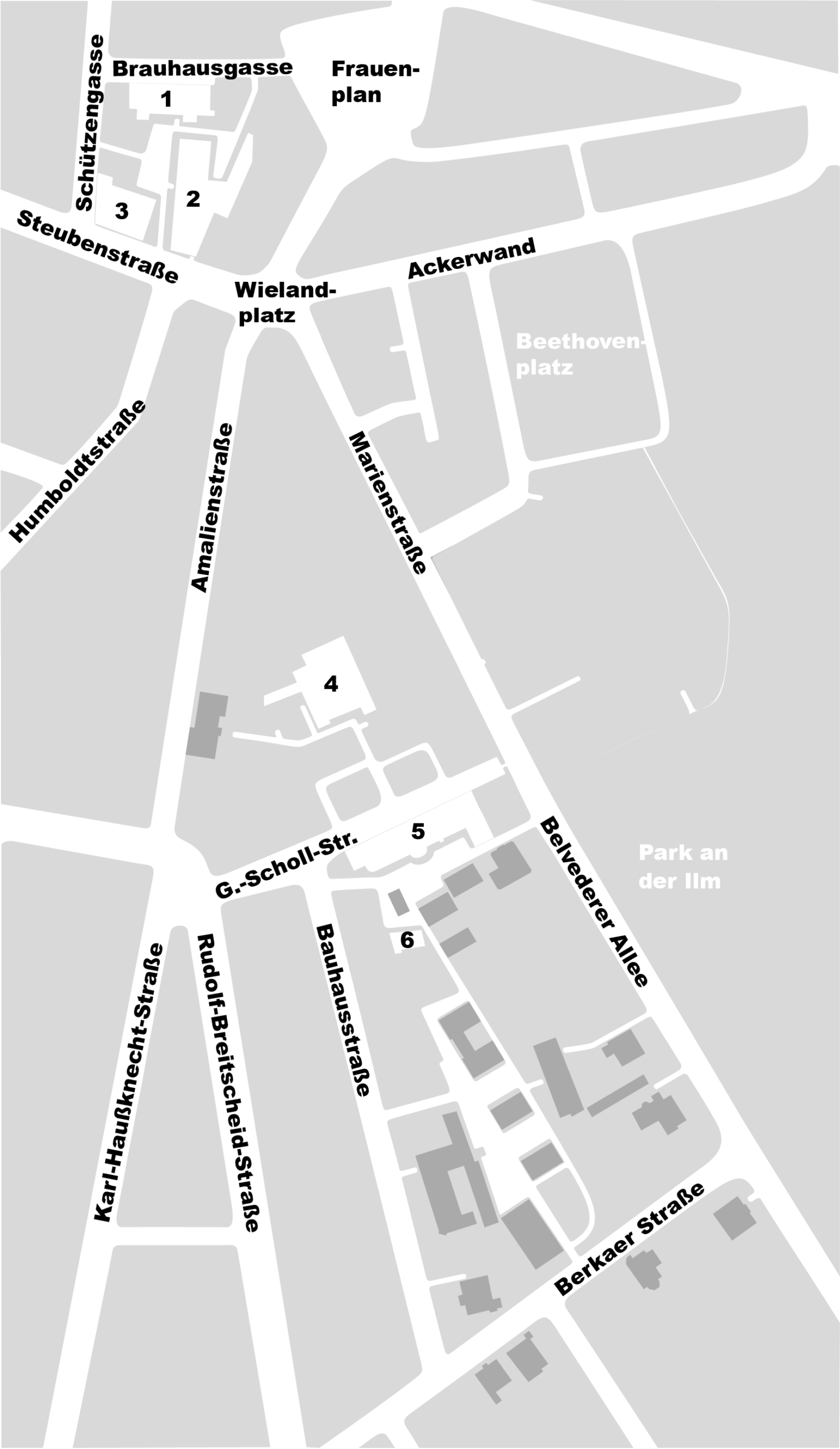
-
►︎1Media House/SCC, Studio 1 & Kinosaal
-
►︎2University Library, Maurice-Halbwachs-Auditorium
-
►︎3Limona, Glaskasten & Fotowerkstatt
-
►︎5Main Building
-
►︎6Prellerhaus, Fotostudio
Registration
►︎Registration Form
All participants in the conference are required to register until 10 October 2026. Tickets are valid during all four days of the conference.
Open registration form►︎Registration Fees
- Participants in professorial positions: € 120
- Participants in academic staff positions (below professorial level) and curators/artists with institutional funding: € 90
- Doctoral candidates without academic employment: € 60
- External students, independent scholars, and independent artistic practitioners without institutional funding: € 45
- Students of Bauhaus-Universität Weimar: € free of charge
Contact and Supporters
►︎Contact
+49 (0) 3643/58 11 17
ibhk2026[at]uni-weimar.de
Bauhaus-Universität Weimar
President’s Office
Geschwister-Scholl-Str. 8
99423 Weimar, Germany
Curatorial Committee
Prof. Peter Benz (President, Bauhaus Universität-Weimar), Prof. Dr. Jasper Cepl, Jun.Prof. Kerstin Ergenzinger, Prof. Dr. Mona Mahall, Dr. Jana Mangold (coordinator), Dr. Marcin Pietruszewski, Dr. Elena Vogman
Design Credits
Leonard Behre
Mona Kerntke
Sun Möller-Park
Coding
Leonard Behre
Mona Kerntke
Nicolás A. Concha R.
Jonas Märtens
►︎Supporters